Some records are meant to be chased. Others were set so far out of reach that even thinking about breaking them feels like a waste of time.
Football has produced moments of brilliance that defy logic, stretches of dominance that rewrote what we thought was possible, and individual feats that make you wonder if the laws of physics took a day off.
These are the records that belong in a museum behind bulletproof glass, because nobody is getting close to them again.
10. Rogério Ceni: The Striker in Gloves (131 Goals)
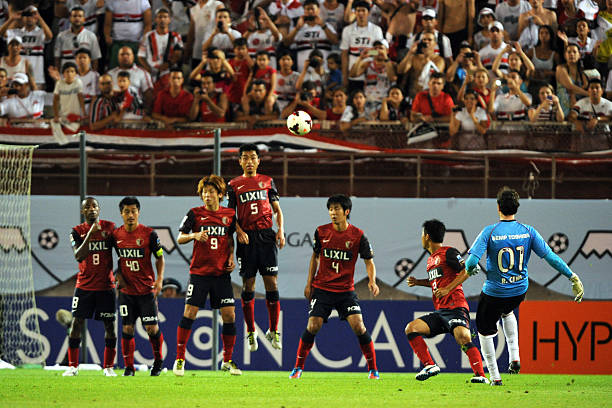
There is a specific kind of arrogance required for a goalkeeper to walk 60 yards up the pitch, place the ball down, and tell ten outfield teammates to move aside. Ceni was the kind, he had that arrogance, and he turned it into a form that nobody has been able to replicate.
He spent 25 years at São Paulo. In that time, he became the club’s main set-piece specialist. I am talking about 131 goals. That number is higher than what many established international wingers manage across their entire careers. That number is higher than what mid-tier strikers dream about when they sign their first professional contract.
The 100th goal was the masterpiece. A curling free kick against Corinthians in 2011. It was surgical. He won 20 major trophies, his real legacy lives in the absurdity of his stat sheet. We live in an era of sweeper-keepers who pride themselves on a 90 percent pass completion rate.
The record feels safe because modern managers are too risk-averse to let their number one leave the penalty area, let alone take a 25-yard free kick. Football has become a game of marginal gains and expected goals.
The idea of your goalkeeper being your best set-piece taker sounds like something from a Sunday league fever dream. .
CHECK OUT | 10 Soccer Players With The Most Trophies In History
9. Real Madrid (15 European Cups)
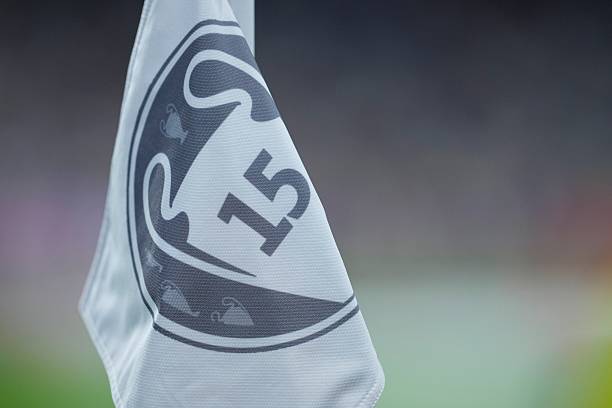
If you want to understand the psychological weight of Real Madrid, just take a look at their trophy cabinet. While other super clubs treat a single Champions League title like a once-in-a-generation miracle, Madrid treats the European Cup like rent.
You pay it. You collect it. You move on.
Fifteen titles. The gap between them and the next best club, AC Milan with seven, is a chasm so wide you could fit entire football nations inside it. This goes beyond money or recruitment. Madrid has successfully convinced the rest of the world that they cannot be beaten in this specific tournament.
They only not win finals. They inhabit them. They own them.
Be it the black-and-white era of Di Stéfano dominating the continent with a swagger that felt almost colonial, or the modern ruthless efficiency of the Ancelotti years where they won titles by sheer force of will and Vinícius Jnr counter-attacks, the result is always the same.
By the time they reached 200 Champions League wins in late 2025, it felt less like a milestone and more like an inevitable mathematical fact. Other clubs celebrate reaching a final. Madrid celebrates only if they win it. That mentality is what separates them from everyone else, and that gap keeps growing.
8. Fábio (1,391 Appearances)
We used to think Peter Shilton’s record was the ceiling. Then Fábio came along and decided ceilings were optional. Sept 25 2024, he became the second-oldest player in the history of the Copa Libertadores, overtaking José Francisco Nieto by six day.
On a Tuesday in August 2025, the 44-year-old Fluminense goalkeeper stepped onto the pitch for his 1,391st professional game.
Think about the sheer volume of bus trips, hotel rooms, pre-match meals, and warm-ups that number represents. He has been playing professional football since 1998. He has survived three decades of tactical shifts, revolutions in sports science, and thousands of younger, hungrier players trying to take his shirt.
He never even got a cap for Brazil, which makes the grind feel even more pure. No international glory. No massive payday in Europe. Just him and the work.
In the game where players talk about being burnt out by 28, where load management is a legitimate part of the convo, Fábio is a glitch in the system. He is proof that if you love something enough and your body cooperates just long enough, you can outlast everyone.
He has played more games than some clubs have existed. That kind of longevity requires something beyond fitness. It requires an immunity to boredom and an ability to find motivation on a rainy Wednesday in the Brasileirão when you are 43 years old and nobody is watching.
7. Arsenal: The 49-Game Invincibility
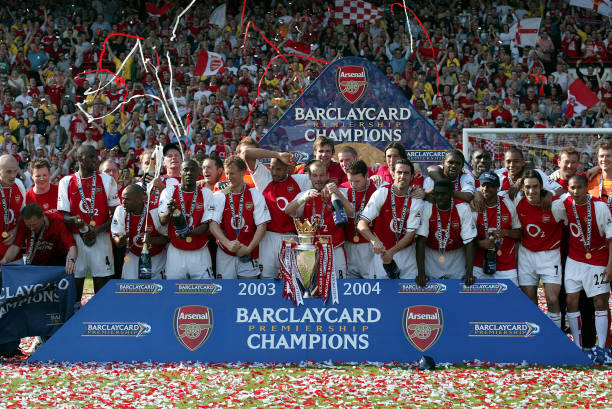
People love to point out the draws. They talk about the Invincibles like they were lucky to escape certain afternoons at Bolton or Fratton Park. Go back and watch the footage. Wenger’s Arsenal from 2003 to 2004 was not just a football team. It was a track team that could also play beautiful, intricate passing patterns at 100 mph while making you look foolish.
To go through an entire 38-game Premier League season without a single loss is a feat of mental discipline that defies logic. You have to survive the flu outbreaks in December, the bad refereeing calls, the heavy pitches in January, and the inevitable off days when nothing clicks.
Manchester City has spent more money than a small nation. Liverpool under Klopp racked up 97 and 99 points in consecutive seasons. Neither could navigate a full calendar without slipping up once.
That 49-game run ended in a literal Battle of the Buffet at Old Trafford, with pizza flying and Ferguson smiling like he had just slayed a dragon. However, the gold trophy in Arsenal’s cabinet remains the only one of its kind.
The modern game is too unforgiving. One bad VAR call, one red card, one wonder strike from a relegation candidate, and the dream dies. Arsenal survived all of it for 49 straight games. Nobody has come close since, and the longer time passes, the more it feels like nobody ever will.
6. Erwin Helmchen (142 Hat-Tricks)
Before Pelé was a household name, Helmchen was busy making a mockery of German regional football. The numbers associated with helm (pun-intended) feel like they come from a video game with the difficulty turned down to amateur mode and the sliders broken.
The RSSSF credits him with at least 142 official hat-tricks. For context, Cristiano Ronaldo and Lionel Messi, the two greatest scorers of the modern age have about 120 combined. Let that sink in.
His career was mostly spent in the German lower and regional leagues between the 1920s and 1950s, which is why he never became a global icon. But the sheer volume of his output is terrifying.
He scored nearly 1,000 goals. Even if you account for the era, the weaker defenses, the lack of tactical organization, the consistency required to score three goals in a single match 142 times is a level of predatory instinct we will never see again.
Modern football is too structured. Defenses are too well-drilled. The gap between professional levels is too narrow. He was operating in a different universe, one where a true elite finisher could feast on lesser opponents week after week. That universe no longer exists.
CHECK OUT | 10 Greatest Soccer Players Who Wore the Number 7 Jersey
5. Manchester United (1,062+ Games)
This one is not an individual record, but it might be the most impressive institutional achievement in the sport. Since October 1937, Man United has never named a matchday squad for a league game that did not include at least one player from their youth system.
Let that sentence breathe for a second. Since 1937. The streak survived the Munich Air Disaster, which killed eight players and nearly destroyed the club. It survived relegation in the 1970s. It survived the barren years before Ferguson arrived.
It survived the chaotic circus years after he left. It has outlived world leaders, technological revolutions, and the entire modern era of football.
Even in 2025, with the global transfer market more frantic than ever and clubs spending fortunes on teenage prospects from other continents, the names change but the presence of one of their own remains. Mainoo. Garnacho.
The next kid off the Carrington conveyor belt. It is a stubborn, beautiful refusal to abandon identity in a sport that has abandoned almost everything else in the name of short-term success. The academy system at United is not just a production line. It is a religion. And this record is proof that faith still matters.
4. Just Fontaine (13 Goals in One World Cup)
In modern World Cups, if you score six goals, you usually walk away with the Golden Boot, a massive transfer move, and endorsement deals that set you up for life. In 1958, Just Fontaine scored 13. In six games. In one tournament.
He did not even have his own boots. He had to borrow a pair from a teammate. He then proceeded to dismantle every defense in his path. Four goals against West Germany. Two against Paraguay. Hat-trick against defending champions West Germany in the third-place game.
It was relentless. It was brutal.
Today’s game is too structured for this to ever happen again. The scouting is too sophisticated. Teams do not get surprised anymore. Players are studied frame by frame before tournaments even begin.
The recovery times between matches are too short for anyone to stay that sharp, that clinical, for that long. Fontaine’s record is not just a high bar. It exists in the stratosphere, somewhere beyond where oxygen is thin and logic breaks down.
Scoring 13 goals in a single World Cup is like running a two-hour marathon. Technically possible in theory, but the circumstances required are so perfect that we might never see them align again.
CHECK OUT | 10 Greatest Soccer Players Who Wore the Number 9 Jersey
3. Gianluigi Buffon (657 Serie A Games)
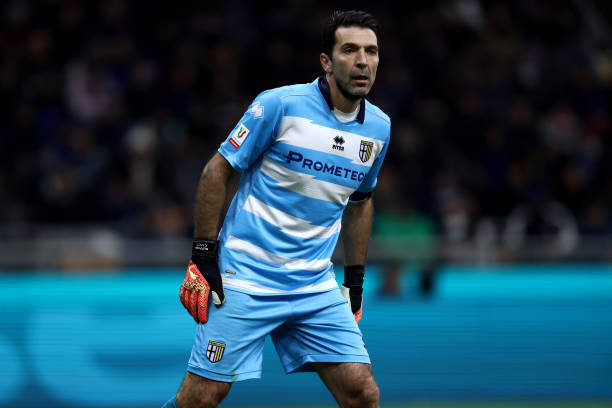
There is a longevity in Italy that hits differently. The careers last longer. The respect runs deeper. The legends refuse to leave. Gianluigi Buffon did not only play for a long time. He played at an elite level until he was practically a grandfather by football standards.
His 657 Serie A appearances are a monument to professional standards, physical maintenance, and mental resilience. He stayed through the relegation of Calciopoli when Juventus was sent to Serie B and half the squad fled.
He stayed through the lean years when the team was rebuilding. He left for Paris, realized it was a mistake, and came back for a swan song.
To play that many games in one of the most tactically demanding leagues in the world requires a body of iron and a mind that never gets bored of the routine.
Save after save. Week after week. Season after season.
When he passed Paolo Maldini’s record, it felt like the passing of a torch between two gods. Buffon was the last of a dying breed, the type of player who defined loyalty and excellence over two decades.
Nobody is playing 657 games in Serie A again. The game has changed. Bodies break down faster. Clubs move on quicker. Buffon was the end of an era.
2. Lionel Messi The Most Decorated (47 Titles)
By late 2024, the argument was over. With the addition of the MLS Supporters’ Shield and another Copa América, Lionel Messi reached 47 official trophies. He has won everything it is possible to win, multiple times over, on two different continents and on the international stage.
The sheer variety stuns you. 4 Champions Leagues. 10 La Liga titles. A World Cup. Multiple Copa Américas. An Olympic gold medal. Domestic cups in Spain, France, and the United States.
He has won with different managers, different teammates, different systems.
From the dominance of Pep-era Barcelona, where football felt like a science experiment conducted at warp speed, to the emotional release of the World Cup in Qatar, where an entire nation wept as he lifted the trophy, Messi has spent twenty years as the protagonist of the beautiful game.
Every time people thought he was done, he adjusted his game, dropped five yards deeper, and started lifting trophies in a different jersey.
47 titles is not a career. It is a dynasty. It is proof that greatness is not just about talent. It is about sustaining excellence across eras, across continents, across every possible variable the game can throw at you.
Nobody is touching that number. Nobody is even getting close.
CHECK OUT | 20 Greatest MLS Players in History
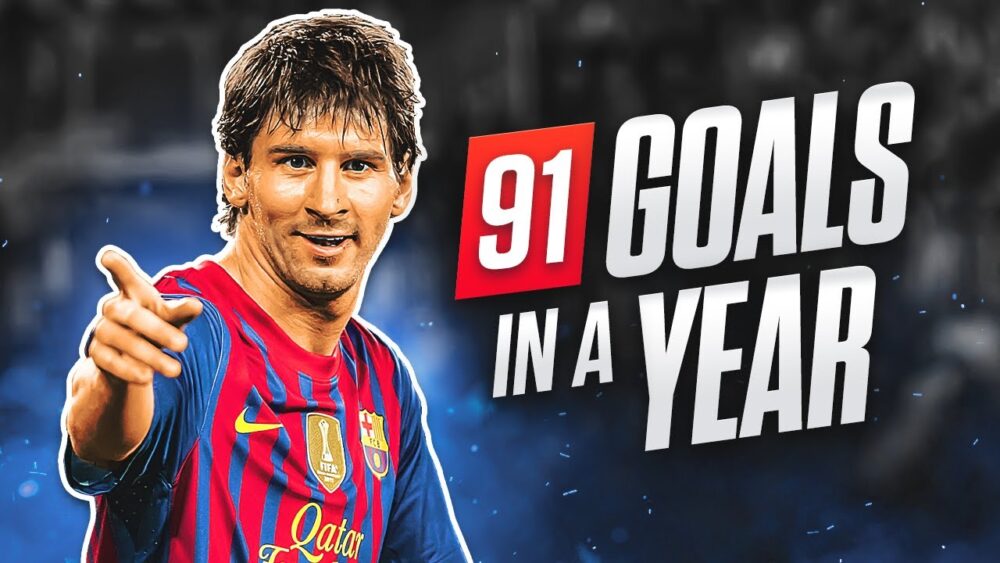
1. Lionel Messi (91 Goals in 2012)
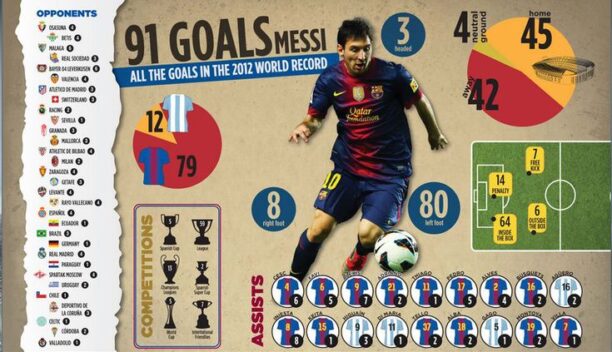
If you saw it happen in real time, you still do not quite believe it. In a calender year, Messi scored 91 goals.
Forget the tactics. Forget the expected goals models. Forget the analysis and the think pieces. Just look at the raw math. He averaged a goal every 66 minutes for an entire year. He surpassed Gerd Müller’s record of 85 goals, a number people thought was carved in stone, and he did it with a nonchalance that felt almost insulting to everyone who had tried before him.
He scored five in a single Champions League game against Bayer Leverkusen. He scored hat-tricks like they were tap-ins. He thrashed out defenses with a cold efficiency that made you wonder if he was bored. He was a 5-foot-7 glitch in the matrix, a player who had figured out a cheat code that nobody else had access to.
In the decade since, even the most prolific seasons from Erling Haaland, Viktor Gyokeres, Harry Kane or peak Cristiano Ronaldo have not even sniffed the 90-goal mark. Haaland scored 52 goals in his ridiculous debut season at Manchester City and people acted like he had broken football. Messi scored 91 and barely celebrated half of them.
It is the greatest individual sustained period of excellence in the history of human sport. It should not have happened. The human body is not designed to perform at that level for that long without breaking down.
The mind is not supposed to stay that focused, that sharp, that ruthless for 12 straight months. Messi did it anyway, because he was operating on a plane of existence the rest of us cannot access.
It will not happen again. It cannot happen again. We were lucky to see it once.