Every strong team is built on a good defence. That truth holds whether it is a Sunday league side, a youth academy, or a professional locker room. Solid defending is never accidental. It is shaped over hundreds of repetitions, quiet corrections, and long training sessions where details start to matter.
Defending well in soccer goes far beyond tackles and clearances. It lives in timing, body shape, awareness, recovery runs, and decision-making under pressure.
The best defenders read danger early and solve problems before they become emergencies. They stay calm when the game feels loud. They move with purpose when others rush.
That level of confidence does not appear on matchday by chance.
It grows in training. It grows in drills that mirror real moments and demand focus every single rep. It grows when players are taught how to think as much as how to move.
What follows is a collection of ten defensive soccer drills that have stood the test of time.
These are drills used across age groups and ability levels, from young players learning basic movement patterns to adult teams sharpening match readiness. Each drill serves a clear purpose and fits into a bigger defensive picture.
The goal here is not to overload.
These drills build habits. They teach players how to think, move, and react when the game speeds up. They develop defenders who trust their feet, their eyes, and their decisions.
What Makes a Good Defensive Session
A productive defensive session touches several areas.
Movement without the ball. Footwork. Awareness. Recovery speed. Communication. Comfort under pressure.
No single drill covers everything. Variety matters. Mixing physical work with mental challenges keeps players sharp and engaged. It also reflects the reality of defending, which is rarely repetitive or predictable. One moment calls for patience. The next demands speed. The next asks for bravery.
The drills below focus on:
- Individual defending
- Small group decision-making
- Reaction speed and awareness
- Technical comfort under pressure
- Defensive movement patterns
All 10 drills work for youth teams, teenagers, and adults. Adjust spacing, speed, and repetition based on age and fitness. Younger players need shorter work periods and more recovery. Older players can handle longer sequences and higher intensity.
Most sessions require only a ball, cones, and intent. The rest comes from coaching detail and repetition.
CHECK OUT | How Funino Can Transform Youth Soccer Development
1. Headed Clearance and Dribbling Drill
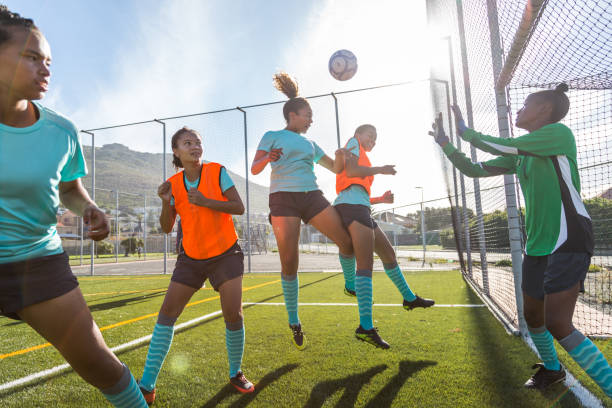
Defenders live in the air. Clearances from corners, long balls, and crosses demand confidence and clean technique. Heading is not about power. It is about timing, body position, and accuracy.
This drill blends aerial defending with ball control immediately afterward. It mirrors the chaos of real match situations where one action flows straight into the next.
Aim of the drill
To improve defensive heading technique while transitioning quickly into control and dribbling.
Equipment
- Two balls
- Three cones
How it works
- Set three cones in a straight line, each about two yards apart. The middle cone is the starting point.
- The player begins at the center cone facing the coach. The coach stands about five yards away with one ball in hand and another on the ground.
- On the coach’s signal, the player sprints forward and touches the ball in the coach’s hand, then shuffles back to the starting cone.
- The coach tosses the ball into the air. The player attacks it with a defensive header, aiming to clear wide and away from the imaginary goal.
- Immediately after the header, the coach plays the second ball into the player’s feet. The player controls it, dribbles toward either side cone, circles it once, then returns to the center and passes back.
Repeat for five to eight reps, then rotate players.
Coaching points
- Emphasize timing and body shape on the header.
- Encourage players to head through the ball, not under it.
- Demand a clean first touch after the header. Fatigue is part of the lesson.
- Keep the tempo realistic. Match speed builds match habits.
This drill teaches players to reset quickly after aerial duels and stay composed when the second action arrives. That ability separates panic from control in real games.
2. One vs One Defending Drill
Every defender faces isolation. A winger driving at speed. A striker turning toward goal. These moments decide matches.
One vs one defending is about patience, footwork, angle control, and courage. It rewards discipline. It punishes recklessness.
Aim of the drill
To develop confidence and discipline in isolated defensive situations.
Equipment
- One ball
- Four cones
- Four flat discs
How it works
- Create a 20 by 10 yard grid using cones. Place two discs at each end to form small goals.
- The defender starts with the ball at one end. The attacker starts near the opposite goal.
- The defender passes the ball to the attacker. As soon as the ball travels, the defender closes space quickly while staying balanced.
- The attacker tries to score. The defender focuses on delaying, steering wide, blocking lanes, and winning the ball cleanly.
Play ends when the ball leaves the grid or a goal is scored. Rotate roles every few reps.
Coaching points
- Stay low and side on.
- Do not stab at the ball.
- Use the sideline as a teammate.
- Patience wins more duels than speed.
This drill teaches defenders that winning is not always about stealing the ball. Sometimes it is about buying time and letting support arrive.
CHECK OUT | Creative Soccer Drills: How to Play the Pirate Game with Pugg Goals
3. Reaction and Mental Sharpness Drill
Defending is a thinking job. Fast legs mean little without a sharp mind. Many goals come from half seconds of hesitation or misreading.
This drill forces players to react, process instructions, and move at speed while staying composed.
Aim of the drill
To improve reaction time, focus, and directional awareness.
Equipment
- Four different colored cones
How it works
- Set up a five by five yard square with four cones, each a different color, placed at the corners.
- The player starts in the center.
- The coach calls out colors at random. On each call, the player sprints to the correct cone, touches it, and returns to the middle.
- Run the drill nonstop for thirty seconds. Rest. Repeat.
Progress by calling colors faster or using feints before the real call.
Coaching points
- Stay on the balls of the feet.
- React to the voice, not to habit.
- Keep the head up while moving.
This drill looks simple. It never feels easy. Fatigue exposes focus lapses, which is exactly the point.
4. Positioning and Movement Drill
Good defenders move efficiently. They stay balanced, recover quickly, and adjust their body shape instinctively.
This drill builds those habits early and reinforces them often.
Aim of the drill
To improve defensive movement, balance, and recovery speed.
Equipment
- Six cones
How it works
- Set five cones in a cross shape. One in the center, one above, one below, one left, one right. Space them evenly.
- The player starts at the top cone in a defensive stance.
- Shuffle backward to the center. Shuffle left to the left cone and return to center. Shuffle right to the right cone and return. Move backward to the bottom cone. Sprint forward to the start.
- Avoid crossing feet. Stay low and controlled.
Repeat for six to eight reps.
Coaching points
- Keep hips open.
- Short, quick steps.
- Head steady.
- No upright running until the final sprint.
This drill builds muscle memory for tracking attackers and adjusting angles without panic.
5. Footwork and Agility Circuit
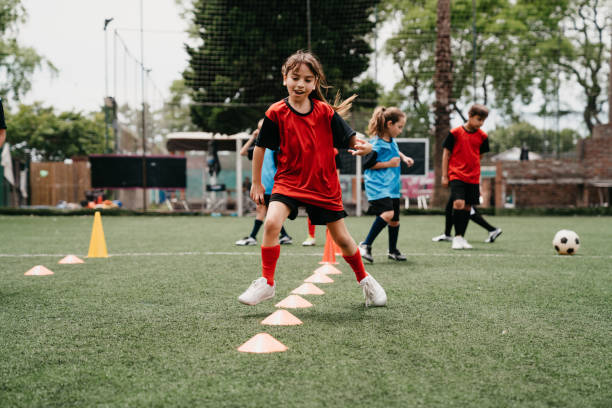
Strong defenders trust their feet. They stay light, responsive, and balanced. They move cleanly in tight spaces.
This circuit focuses on sharp movement patterns that translate directly into defensive situations.
Aim of the drill
To improve foot speed, coordination, and defensive stance control.
Equipment
- Six cones or flat discs
How it works
- Place four cones in a straight line, two steps apart. Place a fifth cone five steps beyond the fourth, then a sixth another five steps beyond.
- Players sprint to the first cone, shuffle around it in a full circle, then repeat at the next three cones.
- After the fourth cone, sprint to the fifth cone, drop into a defensive stance for three seconds, then explode toward the final cone.
Jog back and repeat.
Coaching points
- Light feet, quiet steps.
- Stay low around cones.
- Explode out of the stance.
This drill reinforces balance under fatigue and explosive recovery movement, both essential in late match situations.
CHECK OUT | Fun and Competitive 4v4 Soccer Drill with Small Gates
6. Blocking and Interception Drill
Interceptions change games. They stop attacks before danger develops and often launch counters. They come from reading the game and trusting instincts.
This drill sharpens anticipation and reaction timing.
Aim of the drill
To improve blocking technique and interception awareness.
Equipment
- Two flat discs
- One cone
- One ball
How it works
- Form a triangle using two discs as the base and a cone as the point. The cone represents the goal.
- The player starts at the cone.
- The coach calls out a disc color. The player shuffles toward it, simulates a blocking motion, then returns to the cone.
- Progress by adding the ball. The coach passes toward the called disc. The player steps in and intercepts.
Run for thirty seconds per rep.
Coaching points
- First step is explosive.
- Body behind the ball.
- Soft touch on the interception.
This drill teaches players to protect central spaces and read passing lanes before the ball arrives.
7. Tracking and Recovery Runs Drill
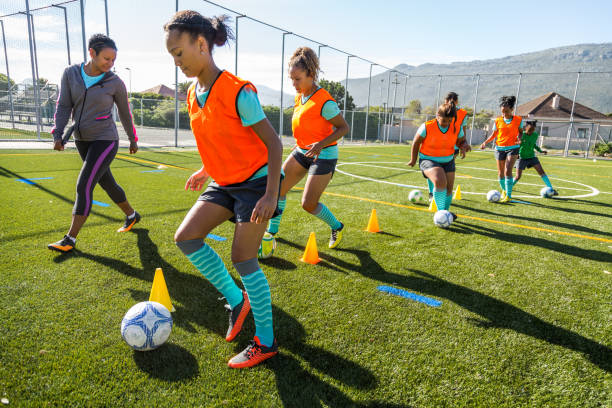
Defensive lapses often come from losing sight of the ball or the runner. Recovery runs save goals. They rarely show on highlight reels.
This drill trains players to track movement while changing direction at speed.
Aim of the drill
To improve ball tracking and recovery urgency.
Equipment
- Four cones
- One ball
How it works
- Set up a 12 by 12 yard.
- The player stands on one side. The coach stands opposite.
- On the signal, the player sprints to a nearby cone. As they move, the coach rolls the ball across the grid toward the far cone.
- The player turns, tracks the ball, and intercepts it before it reaches the line.
Repeat from both sides.
Coaching points
- Turn quickly.
- Sprint in a straight line.
- Approach under control to win the ball.
This drill builds awareness and urgency. It teaches players that recovery is never optional.
CHECK OUT | Youth Soccer Passing Warm-Up Drill for Better Team Play
8. Control and Passing Under Pressure
Defenders must be calm on the ball. Clearances are not always the answer. Composed defenders keep teams alive and moving.
This drill reinforces clean control and accurate passing.
Aim of the drill
To improve first touch and passing consistency.
Equipment
- One ball
- Two or three players
How it works
- Players stand five to seven steps apart.
- Begin with left foot passes only for thirty seconds. Then right foot only. Then alternate.
- Progress to receiving lofted balls controlled with thigh, chest, and head before passing.
Add a passive defender to apply light pressure.
Coaching points
- Cushion the touch.
- Pass through the middle of the ball.
- Head up before receiving.
Simple structure. Huge payoff.
9. Playing Out From the Back Drill
Modern defenders start attacks. They see the field. They choose the right option. This drill builds confidence playing under pressure.
Aim of the drill
To improve decision making and passing angles in the defensive third.
Equipment
- Cones
- Multiple balls
How it works
- Set up a back line shape using cones. Two center backs and two full backs. Add a midfielder ahead.
- One player acts as a pressing attacker.
- The ball starts with the goalkeeper or coach. Defenders move the ball quickly, focusing on angles, support, and communication.
- Rotate positions every few minutes.
Coaching points
- Open body shape.
- Create passing lanes.
- Speak early and clearly.
This drill encourages patience and smart positioning. It teaches defenders to see solutions, not problems.
10. Defensive Game Play Drill
All training should lead back to the game. Skills mean little without context.
This final drill brings everything together.
Aim of the drill
To apply defensive skills in live play.
Equipment
- Full setup
How it works
- Play small-sided games with defensive rules. Award extra points for interceptions. Deduct points for losing shape. Limit touches to encourage quick decisions.
- Rotate teams often. Keep intensity high.
Coaching points
- Compact shape.
- Talk constantly.
- Recover quickly after losing the ball.
Let the game teach the lesson. Good habits reveal themselves under pressure.
How to Structure a Defensive Session
A well-run session flows. It warms up the body. It sharpens the mind. It finishes with game realism.
A simple structure:
- Warm up with movement and reaction
- Technical defensive work
- Small group defending
- Game application
Keep instructions short. Coach during natural breaks. Let players learn through repetition.
CHECK OUT | Fun Soccer Drills for 5-Year-Olds: The Ultimate Guide
Why These Drills Work
Great defending looks simple. It rarely is. It is built through discipline, detail, and trust. These drills teach players to move with purpose. They teach players to stay calm. They teach players to value their role.
Youth players who learn to defend well gain confidence across the field. They become reliable teammates. They become leaders without trying.
Defending builds character. It builds responsibility. It builds pride.