Youth soccer development thrives when players are actively involved, making decisions, learning skills, and enjoying the game. Too often, training sessions leave young players waiting for the ball, watching more than playing, and losing confidence in the process.
Funino changes that.
It is a small-sided, fast-paced game format designed to maximize touches, improve decision-making, develop technique, and build tactical awareness.
With its compact pitches, multiple goals, and constant engagement, Funino gives every child the opportunity to grow, express creativity, and develop the skills they need for real football.
On most afternoons, youth football looks the same everywhere. Lines of children waiting their turn. One ball.
One coach shouting instructions. Long pauses between touches. For many players, the game becomes something they watch more than something they live. Talent gets bored. Confidence shrinks. The smallest and quietest fade into the background.
Funino quietly fixes that.
Why Traditional Youth Training Often Fails
Many youth sessions are built like adult training, just scaled down. Big pitches. Long drills. One ball moving between many feet. Coaches controlling every detail. Players spending more time listening than playing.
Young players need repetition with freedom. They need to solve problems on their own. They need to feel the ball often and in different situations. They need to learn without fear.
When sessions are slow, players switch off. When drills are rigid, creativity dies. When mistakes are punished, courage disappears.
Funino flips this.
What Makes Funino Different
Funino creates a game environment where:
- Every player attacks and defends
- Decisions are constant
- Space changes every second
- Teammates rotate naturally
- The ball never sleeps
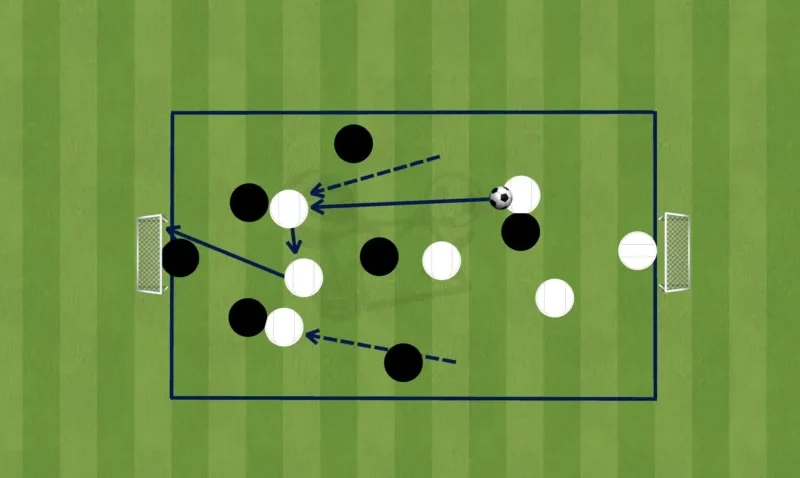
With four goals, players must scan. With no fixed positions, they must think. With small numbers, they must act. There is no room for passengers.
This is how real understanding grows.
CHECK OUT | Choosing Your Soccer Position: 7 Proven Steps for Young Players
The Technical Benefits
Funino sharpens technique in ways drills never can.
Close control improves because space is tight. Passing becomes sharper because angles are limited. Receiving becomes cleaner because pressure is immediate. Shooting becomes instinctive because chances appear suddenly.
Players learn to use both feet without being told. They learn to protect the ball because they have to. They learn to combine because solo play fails quickly.
The ball becomes familiar. Comfortable. Trusted.
The Tactical Growth
Young players often struggle with game intelligence because they are rarely given space to think. Funino forces thinking without slowing the game.
Players learn:
- When to pass and when to carry
- How to create angles
- How to exploit space
- How to recover when outnumbered
- How to support without being asked
They learn shape without diagrams. They learn pressing without lectures. They learn spacing without cones.
They start seeing the game.
The Psychological Impact
Confidence grows fastest when children feel involved. Funino keeps every player active. No one is ignored. No one is stuck at the back watching others shine.
Mistakes are frequent and accepted. The game moves on quickly. There is no spotlight. No embarrassment. Just learning.
Shy players open up. Quiet players start demanding the ball. Aggressive players learn restraint. Individualists learn teamwork.
The pitch becomes a safe place to express.
CHECK OUT | Best Indoor Soccer Workouts for Youth Players — Train Anywhere, Anytime
The Physical Benefits
Funino builds fitness naturally. Players run because the game demands it, not because a coach orders it. The movements are sharp, varied, and realistic.
Acceleration. Deceleration. Turning. Reacting. Chasing. Recovering.
This is functional fitness. It mirrors the real game.
Young bodies adapt without overload. Energy stays high because the ball is always involved.
Step by Step Guide to Implementing Funino
You do not need expensive equipment. You do not need elite facilities. You need space, balls, and intention.
Step 1: Set Up the Pitch
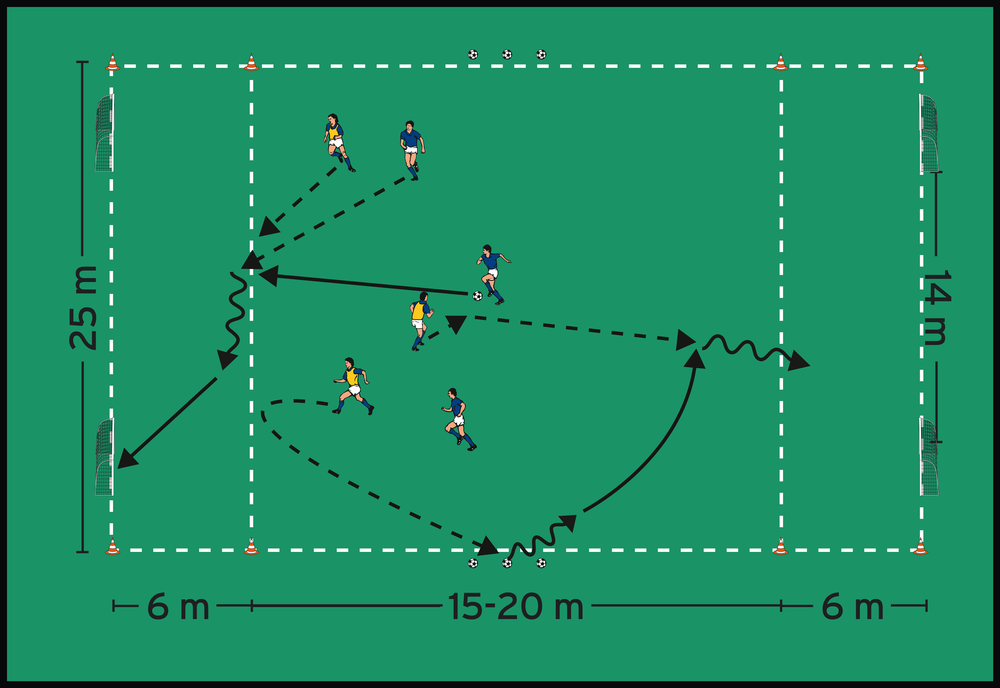
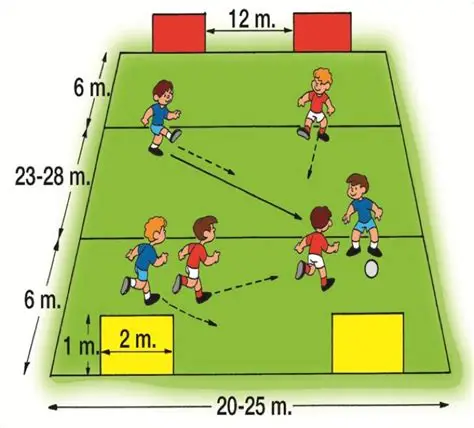
Use a 20×25 meter area for 3v3. Adjust slightly for age and ability. Place four small goals at the edges, two on each side. No goalkeepers. No nets needed if cones are used.
Keep the pitch tight. Space is the teacher.
Step 2: Organize the Teams
Three or four players per team. Mixed ability works well. Rotate teams often. Keep waiting time minimal.
If you have many players, set up multiple pitches. More games beat one big game.
Step 3: Explain Simply
Tell them the objective. Score in any of the two opponent goals. No long rules. No speeches. Start quickly.
Children learn faster by playing than by listening.
Step 4: Let the Game Flow
Resist the urge to stop the game. Observe. Let mistakes happen. Let solutions emerge.
Only intervene when something is clearly stuck.
Trust the process.
Step 5: Add Gentle Challenges
After a few rounds, add simple conditions.
Two touch finish. Weak foot goal counts double. Five passes equals a point. All players must touch before scoring.
Keep it light. Keep it fun.
CHECK OUT | 10 Best Soccer Drills for Solo Practice and Skill Improvement
How to Structure a Full Session with Funino
A strong session might look like this.
Warm up with a simple ball mastery game. Keep it playful. Ten minutes.
Move into two or three Funino games. Rotate teams. Change opponents. Twenty to thirty minutes.
Finish with a larger game, maybe 5v5, where they can apply what they learned. Ten minutes.
That is it. Simple. Clean. Effective.
No cones maze. No endless lines. No shouting.
Developing Game Intelligence Early
Funino accelerates understanding.
Players learn spacing because they feel congestion. They learn timing because passing lanes open and close. They learn patience because rushing fails. They learn urgency because delay costs.
This kind of learning sticks.
By the time they move to 7v7 or 9v9, they already grasp principles that others struggle with.
They know how to create space. They know how to support. They know how to recover.
They play with purpose.
Encouraging Creativity
Creativity dies in rigid systems. Funino gives it oxygen.
With multiple goals, players try different angles. They dribble. They fake. They turn. They improvise.
There is no single right answer. There is room for personality.
This is how flair develops. This is how confidence grows.
Building Team Culture
Funino builds connection.
Players communicate because they need each other. They celebrate together because goals come often. They learn to share because selfish play gets exposed.
It creates small bonds that grow into team spirit.
Children learn responsibility. They learn trust. They learn accountability.
Not because a coach lectures, but because the game demands it.
Managing Different Ability Levels
Funino naturally balances ability.
Strong players get challenged because space is tight. Weaker players get involved because numbers are small.
No one gets hidden. No one gets overwhelmed.
You can also adjust by pairing players or changing conditions. Give advanced players limits. Give developing players freedom.
Growth becomes shared.
CHECK OUT | 10 Big Mistakes Every Soccer Parent Should Avoid
The Role of the Coach in Funino
The coach becomes a guide, not a controller.
Observe more. Talk less. Encourage often. Correct gently.
Ask simple prompts during breaks. Not questions, just cues.
Open space. Move earlier. Support the ball. Protect first touch.
Then let them play.
The best learning happens when the coach steps back.
Common Mistakes to Avoid
Overcoaching kills flow. Avoid stopping every error.
Making pitches too big removes pressure. Keep it tight.
Allowing long lectures drains energy. Keep explanations short.
Focusing only on winning shifts attention away from learning.
Funino works best when freedom leads.
Adapting Funino for Different Ages
For under 6 and under 7, keep it playful. No conditions. Just let them chase and score.
For under 8 to under 10, introduce simple rules. Weak foot goals. Team passes.
For under 11 to under 13, add tactical challenges. Switch play. Quick transitions.
Adjust space as players grow. Let complexity grow naturally.
Linking Funino to the Bigger Game
Funino is not the end. It is the foundation.
Players who grow up in Funino environments transition smoothly to 7v7, 9v9, and 11v11. They already understand spacing. They already scan. They already think.
They are not overwhelmed by the big pitch. They are excited by it.
They see opportunities, not confusion.
CHECK OUT | How to Run a Perfect 7v7 Soccer Scrimmage for Youth Teams
Real Development Over Early Results
Youth football often chases results. Trophies. Tables. Applause.
Funino shifts focus back to growth.
Players who dominate at ten rarely dominate at twenty. Players who learn at ten often shine later.
Funino builds players for the future, not for Saturday headlines.
It creates thinkers. It creates problem solvers. It creates footballers.
Why Parents Notice the Difference
Parents see the change quickly.
Children come home excited. They talk about the game. They practice alone. They ask to play more.
Confidence spills into school. Social skills improve. Energy rises.
Football becomes a positive force.
The Long Term Impact
Players raised on Funino:
- Take responsibility on the ball
- Make decisions under pressure
- Adapt quickly to new systems
- Play with intelligence and courage
- Enjoy the game longer
They do not fear mistakes. They embrace challenge.
They play with freedom.