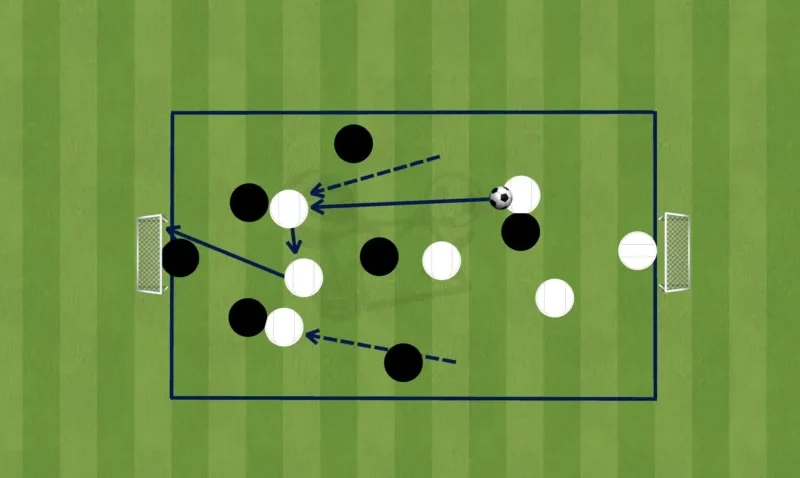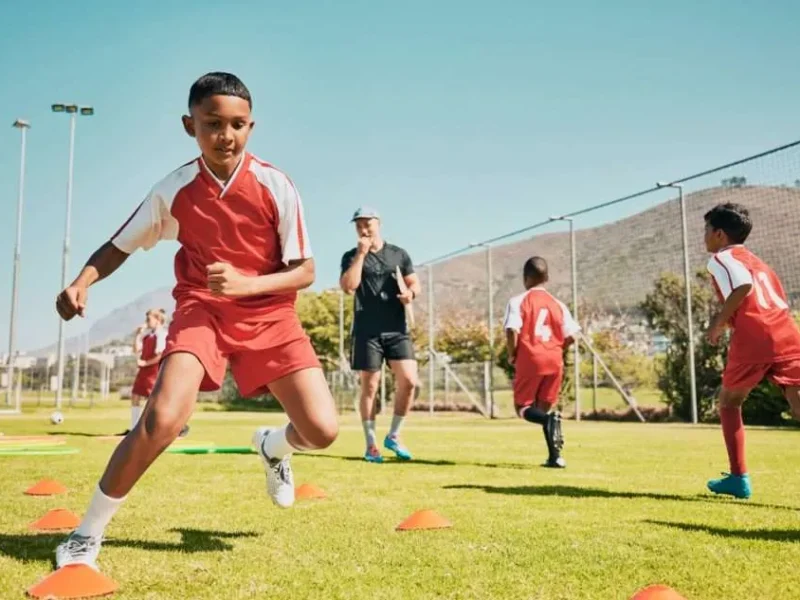
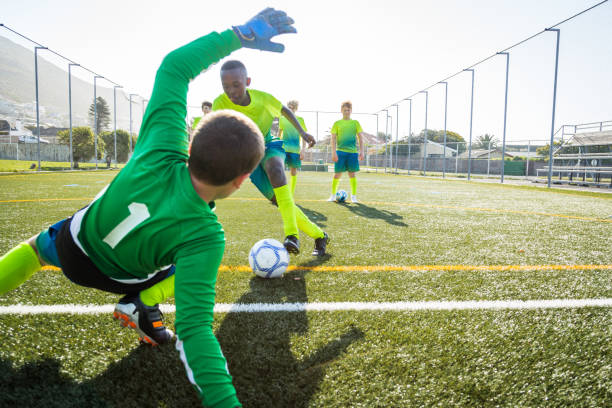
Finding the right position in soccer can feel overwhelming when you’re just starting out. Every position on the field demands something different, and matching your natural abilities with the right role makes all the difference between struggling and thriving.
Too many young players pick their position based on who they admire rather than what actually suits them. They want to be the next Mbappé or Haaland, so they insist on playing striker even though their real strengths lie somewhere else entirely. This approach holds players back and leads to frustration down the line.
The smart way to choose your position involves honest self-assessment, understanding what each role actually requires, and giving yourself permission to experiment. The process takes time, but getting it right early sets you up for years of development and enjoyment on the field.
Step 1: Identify Your Top Skills Through Proper Testing

Most young players skip this step completely, and that creates problems later. You need to know what you’re actually good at before you can figure out where to play.
The best approach involves putting yourself through different types of drills and exercises that reveal your strengths and weaknesses. You can do this during team training sessions, but working on your own in the backyard or at a local field gives you more focused time to evaluate yourself.
Technical Drills
- Ball control: Try to collect a bouncing ball at full speed without slowing down
- Passing: Practice one-touch passing against a wall or with a friend
- Dribbling: Work on quick changes of direction while dribbling through cones or markers
- Heading: Head the ball repeatedly, trying to direct it accurately at different targets and distances
- Shooting: Take various types of shots at goal, mixing ground shots with volleys and attempts from distance
Physical Attributes
- Agility: Test yourself with exercises that involve quick movements in different directions, twisting while running, or getting up quickly from the ground and sprinting
- Endurance: Check your stamina by running longer distances at a challenging pace and seeing how you hold up
- Speed: Measure your performance over short bursts, including runs that require sudden changes of direction
- Strength: Evaluate yourself through one-on-one duels, tackle challenges, and physical battles with other players
Tactical Awareness
- Positioning: Practice positioning yourself based on where the ball is moving
- Anticipation and timing: Work on scenarios with teammates where you have to decide when to press an opponent or when to hold your position
- Composure: Put yourself under pressure by playing against multiple defenders and observing how you handle the stress and make decisions
Recording yourself during these drills helps tremendously. When you watch the footage later, you’ll notice things about your game that you never realized while playing. You might discover that your first touch consistently lets you down, or that you’re faster than you thought, or that you naturally find good positions without thinking about it.
Getting feedback from experienced players or coaches adds another layer of insight. Ask them to grade your performance in different areas and track whether you’re improving over time. Their outside perspective catches things you might miss when evaluating yourself.
Interpreting Your Results
After going through these various drills and tests, certain patterns will emerge:
- Ball control, dribbling, agility, and speed point toward winger or attacking midfielder
- Ball control, shooting ability, and good positioning suggest striker
- Composure, positioning, anticipation, strength, and heading indicate center back
- Great passing and ball control with solid positioning and anticipation point to center midfielder
The key is being honest about what the drills reveal. If you struggle with heading but keep trying to force yourself into a center back role because you like the idea of being a defender, you’re setting yourself up for problems.
CHECK OUT | Top 10 Best Youth Soccer Clubs in the Bay Area
Step 2: Separate What You Want From What Actually Fits
Every kid grows up idolizing the goalscorers. Strikers get the headlines, the highlight reels, the adoration of fans. This naturally leads young players to dream about playing up front, regardless of whether their skills actually match that position.
The hard truth is that your preferred position might not align with where you’ll actually succeed. A 13-year-old who worships Erling Haaland and desperately wants to be a striker might actually have the skill set of a defensive midfielder. Fighting against that reality only delays development and creates frustration.
Choosing your position needs to come from objective assessment rather than wishful thinking. The player who acknowledges their true strengths and builds on them will develop faster and enjoy the game more than someone constantly trying to be something they’re not.
This does not mean you have to abandon your dreams entirely. Players evolve over time, and the position you play at 14 might not be the same one you play at 20. But starting from a foundation that matches your current abilities gives you the platform to grow into other roles later if that makes sense.
If your objective assessment shows you’re best suited for defensive midfielder but you really wanted to play striker, give the defensive role a genuine chance. You might discover you love controlling games from deep, breaking up attacks, and launching your team forward with smart passes. You might find that position suits your personality and playing style better than striker ever would have.
On the other hand, if your skills genuinely align with your preferred position, that’s fantastic. A natural striker who dreams of scoring goals has everything working in their favor. But you still need to confirm that match through honest evaluation rather than just assuming it works.
Step 3: Pay Attention to Which Training You Gravitate Toward

The drills and exercises you naturally enjoy can reveal a lot about which position suits you.
Players who love having the ball at their feet tend to spend extra time on dribbling and ball control work, which points them toward technical positions like attacking midfielder or winger.
Those who enjoy the physical side of training often find themselves drawn to defensive roles where strength and dueling matter more.
This pattern can be helpful, but it also creates a trap. Some players pick positions specifically to avoid training they find difficult or boring, which limits their development.
A player who hates running might try to play striker to minimize the distance they need to cover, even though modern strikers actually need excellent endurance to press defenders and make runs.
The drills you enjoy are not always the ones you need most.
A young center back who loves attacking drills and hates defensive positioning work might be tempted to push forward into midfield, but if their core strengths lie in defending, avoiding that work only makes them weaker at their actual position.
Use your training preferences as information about yourself, but do not let them dictate your position choice.
The best approach involves finding a position that matches your strengths and then committing to all the training that position requires, even the parts you find less enjoyable.
That said, if you absolutely dread every aspect of training for a certain position, that probably tells you something important.
A goalkeeper who hates repetitive handling drills and finds shot-stopping boring should probably reconsider that position, even if they have good reflexes.
CHECK OUT | Creative Soccer Drills: How to Play the Pirate Game with Pugg Goals
Step 4: Learn What Modern Soccer Actually Demands From Each Position
Understanding what each position truly requires in modern soccer is crucial. The game has evolved dramatically over the past decade, and positions that were once simple now involve complex responsibilities.
Goalkeeper
Modern keepers have transformed from shot-stoppers into active participants in team tactics:
- Reflexes: Essential for one-on-one situations and making crucial saves
- Agility: Needed to cover the goal area effectively and react quickly to threats
- Anticipation: Critical for making split-second decisions about when to rush out or stay back, whether to catch or punch crosses, and how to distribute the ball
- Communication: Must organize the entire defensive line and maintain constant dialogue with defenders
- Passing: Now essential, as keepers like Manuel Neuer and Ederson function almost as extra center backs, starting attacks from the back
Center Back
These defenders remain primarily responsible for marking opposing strikers and protecting their goal:
- Positioning: Fundamental because any gaps in the defensive line create dangerous opportunities
- Determination: Needed to make crucial tackles and stay calm under pressure
- Endurance and strength: Allow them to compete in constant duels and maintain performance throughout matches
- Speed: Required to track quick attackers and recover when caught out of position
- Passing: Now vital as center backs actively participate in building attacks from the back
- Heading: Remains essential for defending set pieces and contributing during offensive corners and free kicks
Full Back
Perhaps the position that has evolved most dramatically in modern soccer:
- Speed: Non-negotiable because they need to support attacks and track back to defend against opposing wingers
- Endurance and stamina: Enormous requirements given the ground they cover bombing up and down the entire length of the field
- Long passing: Helps them exploit space on the flanks and deliver crosses into the box
- Dribbling: Allows them to carry the ball forward and beat opponents in wide areas
Center Midfielder
These players control the tempo and flow of matches from central positions:
- Passing: Primary weapon for distributing the ball to teammates and maintaining possession under pressure
- Decision-making: Separates good midfielders from great ones, constantly analyzing the field and choosing the right option
- Ball control: Allows them to operate in tight spaces where opponents press aggressively
Defensive Midfielder
Adds a more protective dimension to the central midfield role:
- Fitness and strength: Help them endure constant physical battles and cover large areas of the pitch
- Positioning: Must cover the area between the midfield and defensive lines effectively
- Defensive awareness: Breaking up opposition attacks and shielding the defense
Attacking Midfielder
The creative heart of many teams:
- All center midfielder skills: Plus additional offensive capabilities
- Speed: To exploit space in the final third
- Dribbling: To create chances in tight areas where defenses are most organized
Winger
Operate on the flanks in attacking areas, constantly under pressure:
- Ball control and dribbling: Allow them to beat opponents in tight spaces and create chances for strikers
- Speed and acceleration: Mandatory for exploiting space on the flanks and delivering dangerous crosses
- Technical ability: Essential for one-on-one situations where they have limited space to work with
Forward
Finish the chances created by their teammates:
- Shooting: Directly determines their success because scoring goals is their primary job
- Ball control: Allows them to hold up play with their back to goal and bring teammates into the attack
- Positioning: Crucial for finding space in crowded penalty areas and making perfectly timed runs
Understanding these requirements helps you match your skills to positions realistically. A player with great passing ability but limited speed might struggle as a winger but thrive as a center midfielder. Someone with excellent speed and dribbling but weaker tactical awareness could excel on the wing while finding center midfield overwhelming.
CHECK OUT | How to Prevent Burnout in Female Soccer Players: 10 Helpful Tips
Step 5: Experiment With Different Positions in Actual Matches
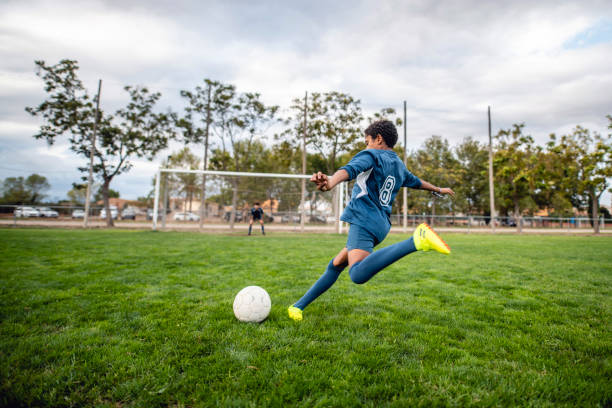
Reading about positions and training for them only teaches you so much. You need to actually play different roles in competitive situations to truly understand what they involve.
Young players have a huge advantage here because they can adapt more easily to different positions. Your body and mind are still developing, which means you can build the physical attributes and skills needed for various roles. Older players often get locked into one position and find it difficult to switch, but teenagers and younger kids can experiment freely.
Benefits of Position Experimentation
- Deeper understanding: When you’ve played striker, you understand what forwards need from their midfielders. After spending time at center back, you recognize how defenders think and move
- Unexpected discoveries: You might find that a position you never considered actually suits you perfectly
- Elimination process: Helps you rule out positions that definitely do not work for you
- Increased versatility: Makes you more valuable to your team and gives coaches tactical flexibility
You also might discover that a position you never considered actually suits you perfectly.
Maybe you assumed you would play in attack but found that you love the defensive side of the game once you tried it. Or perhaps you thought midfield would bore you until you experienced the satisfaction of controlling a match from the center of the field.
The trial-and-error process helps you eliminate positions that definitely do not work for you. After a few matches at goalkeeper, you might realize you hate the pressure of being the last line of defense.
A few games as a striker might reveal that you get frustrated when you do not get many touches on the ball. This information is just as valuable as discovering what you love.
Once you identify your primary position, continuing to play other roles occasionally keeps you versatile and valuable to your team.
A player who can competently play two or three positions gives coaches tactical flexibility and becomes more likely to see playing time.
Step 6: Build Versatility by Learning Multiple Positions
Modern soccer increasingly rewards players who can perform well in more than one position. Coaches constantly adjust formations and tactics, and having players who can seamlessly switch roles makes those adjustments much smoother.
Injuries and suspensions also force teams to shuffle their lineups.
The player who can only perform in one specific position becomes a problem when circumstances require changes. The versatile player who can slot into two or three different roles becomes invaluable.
Professional Examples of Versatility
Sergio Ramos: Started as a right back at Sevilla and continued in that role when he joined Real Madrid. Around age 27, he transitioned to center back due to squad needs, and he adapted so well that he became regarded as one of the best center backs in the world. His technical ability and athleticism even allowed him to drop into defensive midfield when required.
Daniele De Rossi: Built his reputation as one of the best Italian midfielders of his generation, but he gradually moved into more defensive roles as his career progressed. His understanding of the game allowed him to contribute effectively from different positions.
Juan Cuadrado: Full backs who possess exceptional speed and technical ability often make excellent wingers. Cuadrado has starred in Serie A playing both right back and right wing, using his pace and skill in either position.
Cristiano Ronaldo: The striker and attacking midfielder combination works naturally for many players. Ronaldo has moved between wide attacking roles and center forward throughout his career, using his talent effectively in both positions.
Lionel Messi: The ultimate example of positional versatility. He started as a winger, evolved into a false nine under Pep Guardiola, and later transformed into a more traditional number 10 playmaker while still contributing heavily in attack.
You do not need to be a professional superstar to benefit from versatility. Even at youth levels, players who can cover multiple positions get more opportunities and develop a deeper understanding of the game.
CHECK OUT | Youth Soccer Passing Warm-Up Drill for Better Team Play
Step 7: Commit to Your Position While Staying Open to Evolution

After going through the assessment process, trying different positions, and understanding what each role requires, you should have clarity about where you fit best.
At that point, committing to developing the specific skills your position demands becomes crucial.
Position-Specific Development Focus
- Center back: Defensive positioning, aerial ability, and reading the game
- Winger: Dribbling, crossing, and one-on-one attacking skills
- Midfielder: Passing range, vision, and tactical understanding
- Striker: Finishing, movement, and hold-up play
This does not mean completely ignoring skills outside your primary position. Every player benefits from improving their weak points and maintaining a well-rounded game. But your training focus should align with what your position requires most.
At the same time, stay open to the possibility that your position might change as you develop. Physical changes during teenage years can shift what positions suit you.
A player who thrives as a striker at age 14 might grow significantly taller and find that center back suddenly makes more sense at age 17.
Someone who played in attack as a younger player might develop the tactical understanding and passing range that makes them perfect for central midfield later.
Natural Position Evolution Over Time
Your understanding of the game will evolve as you gain experience:
- Strikers often move into attacking midfield as they lose some pace but gain experience and vision
- Athletic full backs transition to center back as their recovery speed decreases but their defensive intelligence improves
- Young attackers sometimes drop deeper into midfield as they develop better tactical awareness
These changes happen because players honestly assess their evolving strengths and adapt accordingly.
The key is committing to excellence in your current position while remaining honest about whether it still fits you as time passes.
A 16-year-old who chose center midfield at age 13 should not stubbornly stick with that position if their development clearly points elsewhere. But they also should not jump between positions every few months based on temporary frustrations.
Making Your Final Decision
Choosing your position combines art and science. The science comes from objective assessment of your abilities, understanding what each role requires, and matching those two things logically. The art involves listening to your instincts about what feels right and where you find the most enjoyment.
Some players go through this process and immediately know they found their home.
The position feels natural, the required skills match what they do well, and everything clicks. Others take longer to find their fit, trying several positions before settling on the right one.
Both paths work fine as long as you stay honest with yourself and give each position a fair chance. The player who rushes into a decision based on limited information might get lucky, but they also might waste years in the wrong role.
The thoughtful player who works through these steps systematically sets themselves up for long-term success.
Remember that choosing your position is not a permanent, irreversible decision. Soccer careers involve constant evolution and adaptation. The position you choose at age 14 might carry you through your entire playing career, or it might be the first of several positions you master over time.
What matters most is making an informed choice based on your current abilities, committing to developing the skills that position requires, and staying open to change as you grow and develop.
Follow these seven steps, be honest about your strengths and weaknesses, and trust the process. The right position for you exists somewhere on that field, and finding it will transform your experience as a player.
CHECK OUT | 10 Big Mistakes Every Soccer Parent Should Avoid