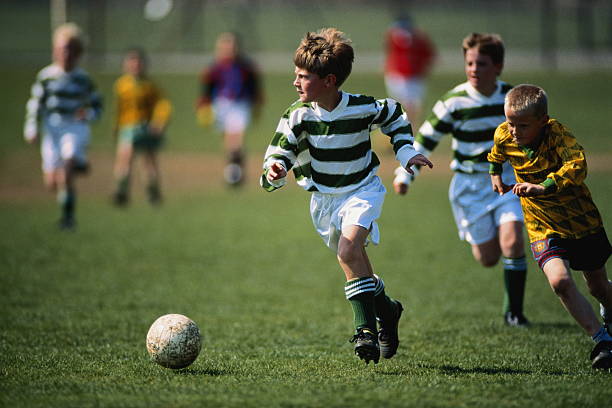
The best soccer finishing drills are the ones that make players comfortable shooting at speed, finding space, reacting quickly and finishing while defenders and pressure are closing in, because scoring goals requires far more than simply striking a stationary ball cleanly.
Finishing is the part of football that turns everything else into something tangible. A team can build patiently from the back, move the ball through midfield, stretch the opposition and create a beautiful opening, but the attack still needs somebody capable of making the final action count.
That final action can look very different depending on the situation.
Sometimes the striker has half a second to shoot after receiving a pass. Sometimes the winger has to carry the ball towards a defender before creating an angle. There are moments when a player needs power, others when placement matters more, and plenty when the best finish comes from staying calm enough to make the right decision.
That is why good finishing training cannot revolve around players standing in a line and repeatedly shooting at an empty goal. Players need repetitions, but they also need movement, pressure, changing angles, defenders, limited time and situations that resemble what actually happens during a match.
Modern coaching increasingly places finishing inside realistic attacking situations, with players required to receive on the move, create shooting space, recognise pressure and execute quickly.
FIFA Training Centre sessions, for example, regularly combine finishing with first touch, movement, 1v1 situations and opposition rather than treating shooting as an isolated technical action.
The core ingredients remain straightforward: shot power, technique, accuracy, vision and anticipation. A player who can combine those qualities becomes far more dangerous around the penalty area, particularly when the goalkeeper has little time to react.
The coaching principles behind the drills in this session include keeping composure, using different parts of the foot, maintaining balance, planting the non-shooting foot firmly and understanding the goalkeeper’s position before choosing where to place the ball.
1. Receive and Shoot While Sprinting

Finishing becomes considerably harder when the player is moving at full speed, because the body is travelling forward, the ball may arrive unexpectedly and there is less time to organise the final touch before the goalkeeper reacts.
This drill develops exactly that skill by asking players to receive a ball and finish after accelerating through a series of cones, creating a simple but useful connection between speed, coordination and shooting technique.
Set-up
Place four or five cones approximately two metres apart, with the final cone positioned close enough to the goal for the coach to play the ball into the runner’s path.
The coach should stand near the sideline with a supply of balls, while the player begins away from the goal and prepares to accelerate through the cone course.
How to perform it
- The coach signals the player to begin the forward run.
- The player moves around each cone at increasing speed, with the intention of reaching the final cone at a high pace.
- As the player approaches the final cone, the coach releases the ball into their path.
- The player takes the ball under control, quickly identifies the available finishing angle and shoots.
- Players should alternate sides so they practise receiving and finishing with both feet.
The original drill is designed specifically to improve shooting while moving at speed and dealing with a ball that arrives unexpectedly.
The most important coaching point is that players should not slow down unnecessarily before the finish, because the exercise is supposed to challenge their ability to organise their body and execute the shot while still carrying momentum.
For advanced players, add a goalkeeper who varies their starting position, or allow the coach to play the ball slightly to either side so the attacker must adjust their final touch before shooting.
CHECK OUT | How Funino Can Transform Youth Soccer Development
2. Receive, Turn and Drive to a Restricted Shot
The best finishers rarely need several touches to prepare themselves, particularly around the edge of the penalty area where defenders can close the space almost immediately.
This drill introduces that pressure by forcing players to receive, turn, attack towards goal and finish within a defined area, which encourages quicker decisions and sharper execution.
Set-up
Use four cones to mark the shooting line, target area and two target zones around the corners of the goal.
Players exchange quick passes before the coach gives a signal that changes the exercise from passing into finishing.
How to perform it
- Players exchange passes at a high tempo.
- The coach gives the signal at an unpredictable moment.
- The player in possession immediately drives towards goal.
- The player must remain within the marked shooting area.
- The objective is to finish towards the designated target areas around the corners.
- Rotate players regularly so everyone experiences the drill from different positions.
The source drill specifically uses restricted target areas around the goal to improve technique and accuracy while making players alert to sudden finishing opportunities.
The restriction is important because it gives the player a reason to make decisions quickly rather than carrying the ball until the opportunity disappears.
A useful progression is to introduce a passive defender first, followed by a live defender who can close the attacker down after the turn. That progression moves the exercise closer to the conditions players encounter in matches.
3. Switching Play Distance Shot
Long-range finishing is often treated as something players either possess or lack, but shooting from outside the penalty area still involves technique, balance, body position, awareness and an understanding of when the opportunity is actually available.
This exercise introduces those elements through a small-sided game where possession eventually leads to an opportunity to attack or shoot from distance.
Set-up
Organise two teams of five players and one goalkeeper, with a clearly marked line outside the penalty area acting as the shooting reference.
The playing area should provide enough space for players to circulate the ball before attempting to create a shooting opportunity.
How to perform it
- The two teams compete through a sequence of passes.
- The coach introduces the finishing phase with a signal.
- The team in possession must advance towards the marked line or take a shot from distance.
- The defending team actively attempts to block the attack and prevent the finish.
- Reset after the sequence and begin again.
The original exercise uses a 5v5 format and introduces defensive pressure specifically to make distance shooting more competitive and realistic. For coaches working with younger players, building that pressure into training also provides a useful opportunity to develop basic defensive habits, from closing down space to blocking shots and protecting the goal.
The biggest coaching mistake here is rewarding players simply for shooting hard, because power without accuracy can turn a promising attack into an easy possession reset.
Encourage players to look at the goalkeeper before striking, notice whether the keeper is positioned centrally and choose between power, placement or a disguised finish according to the situation.
Small-sided formats can also change the number and type of opportunities available to players, with research showing that altering player numbers influences the action opportunities for shooting, passing and possession during training.
4. Two Small Goal Targets
Accuracy deserves its own place in finishing training because a powerful shot directed straight at the goalkeeper is often easier to save than a controlled effort placed into a difficult area.
This drill simplifies the problem by giving players clear targets and making the competition about finding those targets consistently.
Set-up
Place two small goals or target gates in appropriate shooting positions, with players divided into teams and positioned at a suitable distance.
The coach should have enough balls available to keep the exercise moving rather than allowing players to spend most of the session waiting for their turn.
How to perform it
- The coach signals the first player to begin.
- The player moves into position and shoots towards one of the small targets.
- Players compete to score through the target rather than simply hitting the ball with maximum force.
- The next player immediately follows.
- Continue the competition and keep a running score between the teams.
The source drill is designed around two small targets and competition between teams, with the stated emphasis on shooting technique and accuracy.
This exercise works particularly well when coaches vary the distance and angle, because players quickly discover that the same technique cannot be used for every finish.
For younger players, make the targets larger and shorten the distance, then gradually increase the challenge as their technique becomes more reliable.
CHECK OUT | Choosing Your Soccer Position: 7 Proven Steps for Young Players
5. 2v2 to Goal
Finishing becomes much more complicated once another attacker and two defenders enter the picture, because the player must decide whether to shoot, pass, dribble or move into space while simultaneously reading the movements of several opponents.
A 2v2 finishing game provides a much better representation of that problem than repeated unopposed shooting.
Set-up
Create a small attacking area in front of a full-size goal, with two attackers facing two defenders and a goalkeeper protecting the goal.
Give the attacking pair a limited amount of time, with the source exercise using one minute as the scoring window.
How to perform it
- The coach starts the attack.
- The two attackers work together to create a scoring opportunity.
- Defenders attempt to close passing lanes, block shots and protect the goal.
- Attackers must recognise when a shooting opportunity has opened.
- The sequence ends with a goal, defensive recovery or the expiry of the time limit.
- Rotate attacking and defending roles.
The value of the drill comes from the decisions around the shot. A player might receive the ball with a defender tight behind them, while their teammate is making a run across the defender’s line of sight.
The defensive pressure also creates an opportunity to work on what happens immediately after possession is lost, with quick pressure and coordinated movement helping teams win the ball back before the opponent can escape.
The correct finish may therefore begin with a pass rather than a shot.
FIFA’s current finishing practices similarly use 1v1, 2v2 and 3v3 situations to help attackers create shooting angles and space, with first touch, body orientation and off-ball movement forming part of the finishing problem.
6. 1v1 Race, Dribble and Finish

There are few finishing situations more demanding than receiving the ball with a defender chasing you, because the attacker must combine speed, ball control, deception and shooting technique before the defender has enough time to recover.
This drill creates that situation through a race around poles, giving the defender a chance to recover before the attacker attempts to finish.
Set-up
Place six straight poles parallel to one another on both sides of the penalty area, with the defenders starting closer to the end line and attackers positioned further away.
The attacker begins with the ball while the defender starts without it.
How to perform it
- The coach signals the start.
- Attacker and defender race around their respective pole courses.
- The attacker carries the ball while completing the course.
- The defender cannot challenge until completing the course.
- Once the defender finishes the course, they recover and attempt to stop the attacker.
- The sequence ends with a shot, goal or successful defensive tackle.
- Award a point to the attacker for a goal and to the defender for a successful tackle.
The original drill deliberately combines speed, agility, dribbling, 1v1 attacking, shooting and defensive awareness in one competitive sequence.
This is especially useful for forwards and wingers because it teaches them to think about the defender while preparing the final action.
FIFA’s finishing work similarly emphasises receiving on the move, using momentum to attack a defender and creating the opportunity to finish rather than separating dribbling from the shot that follows.
7. Finishing Under Pressure: Create, Beat and Score

The final drill brings together many of the qualities developed in the previous exercises by placing the attacker in a genuine attacking situation where creating the shooting opportunity is part of the challenge.
That matters because elite finishing rarely begins with an uncontested ball sitting perfectly in front of the striker.
Set-up
Create an area around the penalty box with attackers and defenders positioned according to the number of players available.
Use a full-size goal and goalkeeper, then create starting positions that encourage attackers to receive the ball while moving towards goal.
How to perform it
- The attacker receives the ball from a teammate.
- A defender closes down the attacker.
- The attacker uses the first touch to move into space.
- The player attempts to beat the defender or create enough separation for a shot.
- The finish should come quickly once the shooting lane appears.
- Rotate attackers and defenders so every player experiences both sides of the situation.
The source material describes this type of finishing work as a way to prepare players for the intensity of 1v1 attacking and defending, including dribbling, agility, speed, shooting and defensive awareness.
FIFA’s more recent finishing exercises also place attackers under light or active defensive pressure, forcing them to recognise space, orientate their bodies and shoot within tight time and spatial constraints.
What Makes a Player a Better Finisher
The seven drills cover different situations, but the technical foundation remains consistent.
1. Power
Players need enough striking power to beat a goalkeeper from different distances, although power becomes far more useful when it is controlled rather than produced at the expense of accuracy.
2. Technique
Players should become comfortable striking with different parts of the foot, including the instep for power, the inside of the foot for controlled placement and other surfaces when the situation demands improvisation.
3. Accuracy
A player should have a clear target before striking whenever the situation allows it, because aiming for the corners generally gives the goalkeeper less reachable space than simply shooting towards the centre of the goal.
4. Balance
The body must remain controlled through the striking action, while the non-shooting foot provides a stable base that helps the player direct the ball with greater consistency.
5. Anticipation
Good finishers begin preparing before the ball arrives, reading the defender, goalkeeper, teammate and available space so the first touch already moves them towards the action they want to make.
6. Composure
Pressure changes technique, and players who rush their final action often lose the balance and accuracy they possess during unopposed training, which makes pressure-based repetition an important part of development.
Research into finishing decision-making supports this broader view, showing that shooting decisions depend on the available space, the position of opponents and the player’s perception of whether a shot can realistically be executed successfully.
CHECK OUT | Best Indoor Soccer Workouts for Youth Players — Train Anywhere, Anytime
How Coaches Should Use These Finishing Drills
The strongest finishing sessions should not consist of seven drills performed back to back simply to complete a checklist, because players need enough repetitions to improve technique while also experiencing enough variation to transfer that technique into real football situations.
A practical session can begin with a technically simpler exercise such as Receive and Shoot While Sprinting, move into target-based work with Two Small Goal Targets, then progress towards opposition through 2v2 to Goal and the 1v1 Race, Dribble and Finish.
The final stage should give players opportunities to use those skills inside a competitive game, because the ultimate objective of finishing practice is not producing beautiful shots in training but helping players recognise and execute chances when the match becomes chaotic.
For younger players, keep the environment enjoyable and make sure players receive plenty of touches and opportunities to finish. FIFA’s grassroots guidance similarly places small-sided games and practical play at the centre of development, with technical practice followed by opportunities to apply those skills in open play.
For advanced players, increase the realism rather than simply making every drill harder. Add defenders, reduce the available space, vary the quality and direction of passes, introduce time limits and require players to finish with different feet. These situations also help players become more comfortable making quick decisions when opponents press aggressively, a skill that becomes especially useful when learning how to counter a high press.
The best finishing drill is ultimately the one that teaches the player something they can recognise again on match day.
A striker who learns to control their body while sprinting, a winger who learns to create separation before shooting, a midfielder who learns when a distance shot is available and a forward who learns to finish with a defender on their shoulder are all developing different parts of the same skill.
Goals may be the final action, but good finishing starts much earlier, with movement, awareness, first touch, balance and decision-making creating the conditions for the shot to become possible.
That is what makes finishing worth practising properly.
The difference between a chance and a goal can be one touch, one step, one decision or one calm moment when everything around the player is moving quickly.