

Every soccer parent eventually asks the same question: how many days should kids practice soccer? The answer sounds simple until your child starts loving the game, teammates begin training more often, tournaments fill the weekends, and social media starts convincing everyone that the next great player trains every single day.
Before long, practice schedules become a competition of their own, and many parents find themselves wondering whether they are doing enough or quietly doing too much.
The truth sits somewhere in the middle.
Children improve through consistent, purposeful practice, yet they also need time to recover, play freely, enjoy other parts of childhood, and return to the field eager rather than exhausted. More training does not always produce a better player. Better training, supported by enough rest, almost always does.
Youth soccer has changed dramatically over the past decade.
Competitive clubs have become more structured, private trainers have become easier to find, and highlights of young stars fill social media feeds every day. It is easy to believe that every successful player spent every afternoon working with cones, ladders, and resistance bands.
The reality looks very different.
Some of the world’s best footballers spent countless hours playing informal games with friends, experimenting without coaches directing every touch, making mistakes that nobody recorded, and developing creativity simply because they enjoyed having a ball at their feet. Organized practice shaped their talent. Free play gave it personality.
As a parent, your role is not to create the busiest schedule possible. Your role is to help your child build a healthy relationship with soccer that allows improvement to happen steadily over many years instead of chasing rapid progress over a single season.
That perspective changes everything.
The Short Answer
For most children, two to four structured soccer practices each week provide enough training to improve consistently, provided those sessions are well organized, age appropriate, and balanced with rest, free play, school, and family life.
That recommendation changes as children grow older, become more competitive, and move into higher levels of the game.
A useful guide looks like this:
- Ages 4 to 6: One or two organized practices each week, with plenty of unstructured play at home or in the park.
- Ages 7 to 9: Two or three quality practices each week, plus matches and casual play.
- Ages 10 to 12: Three structured practices each week become appropriate for many players, particularly those showing greater commitment.
- Ages 13 to 15: Three or four team sessions each week, depending on competitive level, physical maturity, and overall workload.
- Ages 16 to 18: Four or five training days may suit academy or elite players, provided recovery receives the same attention as training.
These numbers should never become rigid rules.
A child playing recreational soccer twice each week may develop beautifully because every session is enjoyable and challenging. Another child attending five practices every week may stagnate because fatigue has replaced enthusiasm.
The quality of each hour matters far more than the quantity.
CHECK OUT | Can My Child Guest Play for Another Soccer Team?
Why There Is No Specific Number
Parents naturally like clear answers.
One practice feels too little. Five practices feel impressive. Somewhere between those numbers must be the perfect formula.
Youth development rarely works that way.
Every child grows at a different pace. Physical maturity, confidence, attention span, athletic ability, personality, and family commitments all influence how much soccer becomes productive rather than overwhelming.
I have seen two players of the same age attend identical training schedules with completely different outcomes. One left every session smiling, asking to stay longer, and kicking a ball around the backyard after dinner. The other counted the minutes until practice ended because every week had started feeling like another obligation.
Looking only at the calendar would suggest both children trained equally.
Looking at their enjoyment told a very different story.
That difference matters because motivation becomes one of the strongest predictors of long-term improvement. A child who genuinely looks forward to training often accumulates thousands of meaningful touches simply because they keep returning to the ball, even outside organized sessions.
Children forced into constant training often begin counting practices instead of enjoying them.
Practice Should Match Development, Not Ambition
One of the biggest mistakes parents make comes from comparing their child with somebody else’s.
A teammate attends four practices every week.
Another family hires a private coach every Saturday.
Someone else posts videos of daily technical sessions before school.
Suddenly, two team practices begin to feel inadequate.
Those comparisons ignore an important reality.
Children develop along different timelines, and every family operates under different circumstances. Some players thrive with additional technical work. Others need time to recover physically or mentally. Some are balancing demanding school schedules, while others have fewer commitments outside sport.
Adding more sessions simply because another child trains more often rarely produces better results.
Training should answer your child’s needs, not somebody else’s schedule.
What the Best Youth Coaches Look For
Experienced youth coaches often notice the same qualities long before they notice who attends the most extra sessions.
They pay attention to whether a player arrives eager to learn.
They notice who listens, who communicates, who keeps trying after making mistakes, and who remains engaged throughout training.
Technical improvement certainly matters, yet attitude often predicts future progress even more reliably.
A player who enjoys learning usually improves faster than a player who merely completes another practice.
That may sound surprising until you consider how children learn.
Young players absorb information best when they remain curious, relaxed, and emotionally invested in the activity. Constant pressure narrows attention and reduces creativity, while enjoyment encourages experimentation, confidence, and problem solving.
Those qualities become increasingly valuable as players move into older age groups where decisions matter just as much as technical ability.
CHECK OUT | Is an Elite Soccer Academy Better Than a Local Club?
Age Matters More Than Parents Often Realize
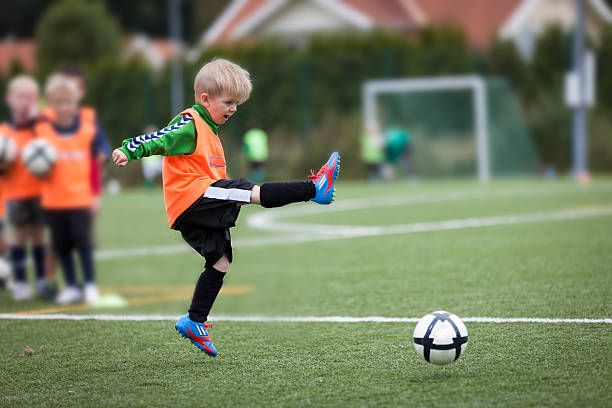
A six-year-old and a sixteen-year-old may both love soccer, yet their bodies, brains, and emotional needs differ enormously.
Treating them the same creates unnecessary problems.
Ages 4 to 6: Build a Love for the Ball
At this age, soccer should feel like play disguised as sport.
Children learn through movement, imagination, repetition, and exploration rather than tactical instruction. Their attention spans remain short, coordination continues developing, and every session should leave them wanting another turn rather than feeling exhausted.
One or two organized practices each week usually provide plenty of structure.
Everything else can happen naturally.
A ball rolling across the living room.
Passing with a parent in the backyard.
Running around the garden pretending to score a World Cup winner.
Those moments count.
Many parents underestimate how much learning happens outside formal coaching.
A child juggling balloons indoors, dribbling around shoes in the hallway, or inventing games alone often develops balance, coordination, confidence, and comfort on the ball without realizing they are practicing.
That relaxed learning environment builds positive emotional connections with soccer that organized sessions alone cannot always provide.
Ages 7 to 9: The Golden Years of Skill Development Begin
Something interesting starts happening during these years.
Children become more coordinated.
They understand simple instructions more easily.
Their ability to repeat movements improves noticeably, and they begin recognizing patterns during matches.
This stage offers an excellent opportunity to establish strong technical habits without making soccer feel like work.
Two or three organized practices each week generally strike an excellent balance.
Sessions should revolve around dribbling, passing, receiving, turning, shooting, and small-sided games that give every player frequent touches on the ball.
Parents often ask whether private coaching becomes worthwhile during this stage.
Sometimes it does.
Sometimes it does not.
A child spending thirty enjoyable minutes every evening dribbling around cones in the driveway often gains more meaningful repetition than another child attending an expensive one-hour session once every week.
Repetition creates improvement.
Meaningful repetition creates lasting improvement.
The environment matters just as much as the activity itself.
A relaxed child willing to experiment, fail, laugh, and try again usually learns faster than one worried about making every touch look perfect.
That lesson continues becoming more important as children move into older age groups, where competition increases, expectations rise, and balancing development with enjoyment becomes one of the greatest challenges facing every soccer parent.
Ages 10 to 12: Development Starts to Become More Purposeful
By the time children reach this age, many begin deciding how important soccer is to them. Some continue playing simply because they enjoy spending time with friends every weekend, while others start dreaming about making the school team, earning a place in an academy, or competing at a higher level.
Their training can become more structured, although it should never lose the sense of enjoyment that first drew them to the game.
For most players, three quality practices each week, along with a match at the weekend, creates enough repetition to improve technically, physically, and tactically without overwhelming their growing bodies.
This is also the stage where players begin understanding why they are practicing a certain skill instead of simply repeating it because a coach asked them to. Passing with both feet, receiving under pressure, scanning before the ball arrives, and making better decisions all become bigger parts of development.
Parents often feel tempted to fill every spare afternoon with extra sessions.
Sometimes that works.
Often, it does not.
I have watched children spend five evenings every week on a soccer field, only to lose interest before reaching high school because the game slowly became another item on their timetable instead of something they genuinely loved.
Ages 13 to 15: Balancing Ambition With Recovery
The teenage years introduce another challenge.
Players grow quickly. Some gain several inches in height within a single season. Muscles tighten, coordination changes, confidence fluctuates, and injuries become more common if training increases faster than the body can adapt.
Three or four organized practices each week are appropriate for many competitive players, particularly those involved in travel teams or high level clubs.
Recovery becomes every bit as important as training itself.
A player who trains four days each week but sleeps well, eats balanced meals, stays hydrated, and takes recovery seriously often progresses much faster than another player squeezing six sessions into an already exhausting week.
Parents sometimes mistake fatigue for commitment.
A child arriving home completely drained every evening may look dedicated, yet constant tiredness usually affects concentration, decision making, technical execution, and enjoyment.
Improvement rarely comes from permanently operating on empty.
Ages 16 to 18: Preparing for the Next Level
Older teenagers chasing academy opportunities, college soccer, or elite competition naturally train more often.
Four or five training days each week may become normal, especially during the competitive season.
Those schedules usually include much more than team practice.
Players may have strength sessions, mobility work, video analysis, recovery routines, technical training, and competitive matches throughout the week.
The difference between these players and younger children lies in how carefully the workload is managed.
Elite environments rarely encourage endless training simply for the sake of accumulating hours.
Instead, every session has a purpose.
Some days focus on intensity.
Others focus on recovery.
Some concentrate on technical improvement, while others prepare tactically for upcoming matches.
That balance keeps players progressing without unnecessarily increasing injury risk.
CHECK OUT | Why Girls Drop Out of Soccer During Puberty
The Importance of Rest Days
Parents sometimes worry that rest means falling behind.
In reality, recovery forms part of the training process.
Children improve after practice, not during it.
Practice creates stress.
Recovery allows the body and brain to adapt to that stress.
Without enough recovery, even excellent coaching produces diminishing returns.
Rest supports muscle repair, energy restoration, coordination, concentration, and emotional wellbeing. It also reduces the likelihood of overuse injuries that become increasingly common in young athletes participating in the same sport throughout the entire year.
Most young players benefit from at least one or two days each week without organized soccer training.
Those days do not need to involve sitting indoors.
Cycling.
Swimming.
Playing basketball.
Walking the dog.
Throwing a frisbee in the park.
Every one of those activities keeps children active while giving soccer specific muscles and movements a chance to recover.
Free Play Still Matters More Than Many People Think

One trend has quietly disappeared from childhood.
Children simply playing soccer.
No coach.
No stopwatch.
No tactical instructions.
No parents discussing formations from the touchline.
Just a ball, friends, and imagination.
Many youth development experts continue pointing to free play as one of the most valuable experiences for young players because it encourages creativity, confidence, problem solving, and decision making in ways structured sessions often cannot.
Children invent solutions.
They try risky skills.
They lose the ball.
They laugh.
Then they try again.
Those moments build football intelligence naturally.
I still remember afternoons where the goals were made from school bags and jumpers, the teams changed every few minutes, and nobody cared about league tables or player rankings. Looking back, many of the decisions we learned in those games later appeared during organized matches without anyone having formally taught them.
Parents sometimes underestimate how powerful simple play can be.
CHECK OUT | Why Futsal Builds Better Footwork Than Indoor Soccer
Signs Your Child May Be Practicing Too Much
Every child responds differently, although several warning signs deserve attention.
Keep an eye out for patterns such as:
- Constant tiredness, even after sleeping well.
- Frequent muscle soreness that never completely disappears.
- Minor injuries becoming increasingly common.
- Loss of enthusiasm before practice.
- Irritability after training sessions.
- Declining school performance caused by exhaustion.
- Reduced confidence during matches.
- Complaints about always feeling pressured.
- Wanting to skip soccer despite previously loving it.
One difficult week does not necessarily indicate a problem.
Several weeks showing the same pattern deserve a closer look.
Parents know their children better than anyone else.
Trusting those observations often proves more valuable than comparing training schedules with other families.
Common Mistakes Parents Make
Most parents act with the best intentions.
Sometimes those good intentions accidentally create unnecessary pressure.
The most common mistakes include:
- Assuming more practices automatically produce faster improvement.
- Comparing one child’s schedule with another player’s.
- Filling every free day with organized soccer.
- Ignoring signs of physical or mental fatigue.
- Treating every match as an evaluation instead of another learning opportunity.
- Prioritizing short term success over long term development.
- Forgetting that enjoyment remains one of the strongest predictors of continued participation.
Children rarely remember every scoreline years later.
They remember how the experience made them feel.
That feeling often determines whether they continue playing into adulthood.
CHECK OUT | How to Counter a High Press: A Tactical Guide
Sample Weekly Practice Schedules
Every family follows a different routine, although these examples illustrate a healthy balance.
Recreational Player, Ages 7 to 9
- Monday: Rest or casual play.
- Tuesday: Team practice.
- Wednesday: Backyard ball work for twenty to thirty minutes.
- Thursday: Team practice.
- Friday: Rest.
- Saturday: Match.
- Sunday: Family activities or free play.
Competitive Player, Ages 10 to 12
- Monday: Recovery.
- Tuesday: Team practice.
- Wednesday: Technical work at home.
- Thursday: Team practice.
- Friday: Team practice.
- Saturday: Match.
- Sunday: Rest.
Elite Teen Player
- Monday: Recovery and mobility.
- Tuesday: Team training.
- Wednesday: Strength training and technical work.
- Thursday: Team training.
- Friday: Tactical preparation.
- Saturday: Match.
- Sunday: Recovery.
The exact days matter far less than maintaining a rhythm that balances improvement with recovery.
CHECK OUT | How to Choose Between FG and AG Soccer Cleats
The Goal Is Long Term Development
Parents naturally want their children to improve quickly.
Progress in soccer rarely follows a straight line.
Some seasons produce huge leaps forward.
Others appear almost unchanged until one day everything begins clicking into place.
Development often hides beneath the surface before it becomes visible during matches.
Patience becomes one of the greatest gifts you can give your child.
Celebrate effort.
Celebrate curiosity.
Celebrate resilience after mistakes.
Those qualities remain valuable long after youth soccer ends.