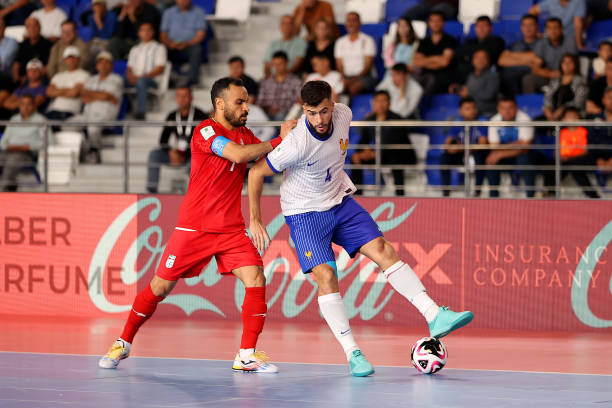
Futsal builds better footwork than indoor soccer because the surface, the ball, and the absence of walls all conspire against laziness, forcing every touch to matter in a way that the average indoor soccer rink simply does not demand.
Walk into any futsal hall in Barcelona, São Paulo, or Tehran on a weeknight and you will see it inside the first five minutes. Players receive the ball on a hard, unforgiving floor, and there is nowhere to hide a clumsy first touch. No rebound off a sideboard is coming to save a misjudged pass.
No turf is going to cushion a heavy ball and buy an extra half second of thinking time. The ball sits low, moves fast, and punishes hesitation immediately, and that single design choice is the root of everything that follows in this argument.
With the 2026 World Cup now well into its knockout rounds across the United States, Mexico, and Canada, the conversation around player development has tilted hard toward technical foundations again.
Commentators keep circling back to the same names when explaining why certain players seem to glide through tight spaces that swallow everyone else. Many of those players, from South America in particular, learned the game on hard courts with a dead ball long before they ever kicked ball on grass competitively. It is a pattern that shows up across generations of the sport’s most technically gifted performers, and it deserves a proper look at why the surface itself does so much of the teaching.
The Ball Does the Teaching Before Any Coach Does
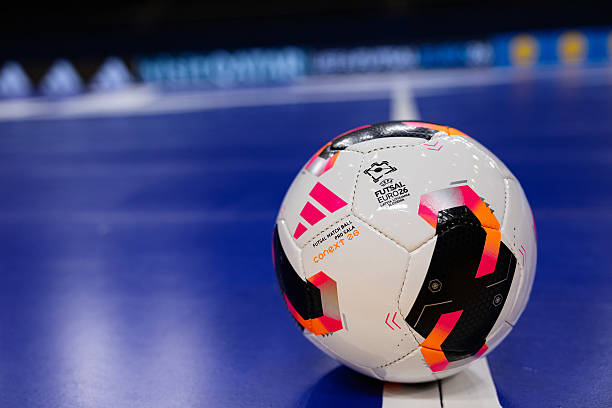
A futsal ball is smaller than the conventional soccer ball and noticeably heavier for its size, with roughly thirty percent less bounce built into its construction. That single specification changes everything about how a young player’s feet learn to behave.
The reduced bounce is critical on the hard court, preventing the ball from getting away from the players and allowing for intricate passing and dribbling. Picture the difference for a moment. An indoor soccer ball, played on turf with a normal bounce profile, drifts and skips when it is mishit.
A futsal ball stays low and stays close, which sounds like a small mercy until you realize what it actually does to a developing player’s technique. It removes the bailout. There is no lucky bounce that turns a poor touch into a passable one.
This is where the comparison with indoor soccer really splits open.
Indoor soccer, the kind played in arenas with surrounding boards and a regular or slightly modified ball, was built around continuous action and crowd-pleasing pace. Although both soccer styles emphasize quick reaction rates and proficient footwork, indoor football demands a strong defense due to its larger goal and pitch.
The boards keep the ball alive constantly, which is thrilling to watch and genuinely useful for building stamina and game sense, but it also means a player can shank a pass into the wall and still receive it back in a playable position seconds later. Futsal offers no such forgiveness.
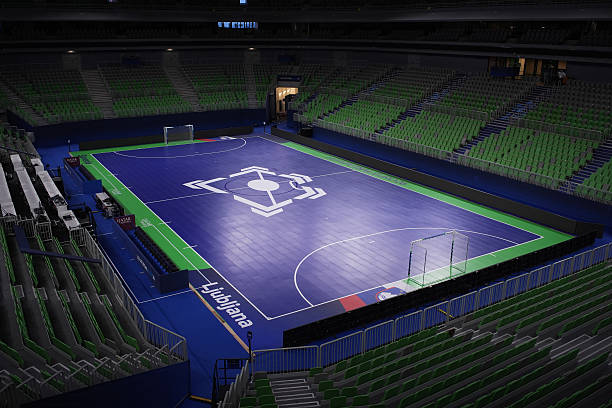
The court has no walls at all, only painted lines, and once the ball crosses them play stops dead for a kick-in or a corner. Every misplaced pass becomes a visible, countable mistake, and that visibility is precisely what trains a foot to behave with more precision the next time.
Space Disappears and the Feet Have to Compensate
The dimensions tell their own story here. A regulation futsal court runs about forty meters by twenty, a fraction of even a small indoor soccer arena, and that compression changes the calculus of every single touch a player takes. This makes it substantially more difficult to attack with the ball, placing a premium on delicate footwork and quick decisions.
When a defender is three feet away rather than ten, a player cannot rely on speed or a long first touch to escape pressure. The only tool left is the foot itself, and specifically its capacity to manipulate the ball through tiny, almost surgical adjustments, a roll here, a drag there, a sole touch to shift the angle of an opponent’s run without ever losing the ball’s proximity to the body.
Coaches who have spent real time inside both environments tend to describe this difference in almost identical language regardless of where they are based.
The phrase that keeps surfacing is quality of touch rather than quantity of touch, and it is worth sitting with that difference because it cuts against a common misconception about indoor football generally.
Futsal players laugh at this argument. They do not believe in walls. They argue that soccer skills develop, not by the quantity of touches, but by the quality of touches. Without a wall to forgive an error, a player passing too hard simply loses the ball out of bounds. Accuracy becomes less important when walls hide your mistakes.
In futsal, mistakes will be punished. That punishment, repeated thousands of times across a season, is what carves precision into a player’s feet at a level that purely volume-based repetition struggles to match.
The Numbers Behind the Repetition
There is a less romantic part of this story that involves raw data rather than philosophy, and it matters just as much. Lots of youth development programs now track ball touches per player across different formats, and the gap between futsal and conventional indoor or outdoor play is not subtle.
Research shows kids get up to six times more touches in futsal compared to outdoor soccer, a figure that some governing bodies and academies cite even higher depending on the format being measured against. One older but often referenced figure from coaching circles places the touch differential as high as 210 percent more than players playing traditional indoor arena soccer, a number that varies by source but consistently points in the same direction regardless of who is doing the counting.
Why does touch volume matter so much for footwork specifically, as opposed to general fitness or game understanding.
The honest answer sits in motor learning science rather than anything mystical about the sport itself. Skill acquisition in any physical discipline depends on the density of meaningful repetitions a person performs under varying conditions, and futsal compresses an enormous number of those repetitions into a short span of real time.
A child who plays 60 minutes of outdoor 11-a-side soccer might touch the ball for a combined total of two or three minutes across the entire match. The same child playing futsal for the same 60 minutes might be directly involved in the play for ten times that duration, because the smaller numbers on court and the constant rotation of possession in tight spaces just demand it.
The smaller playing space means everyone is constantly involved. There’s no standing around on the sideline or waiting for the ball to come down to their end of the field.
What the Surface Does to the Ankle and the Plant Foot
This is where the conversation moves from observation into something closer to hard science, and it is worth slowing down here because it explains why futsal specifically, rather than just any small-sided indoor format, produces the footwork outcomes it does.
Researchers studying change of direction mechanics in futsal players have found that the playing surface itself alters how the ankle behaves during a cutting or pivoting movement.
A 2021 biomechanics study examining sidestep cutting tasks on different futsal court surfaces found that a higher friction synthetic surface produced significantly higher peak plantarflexion angle, lower peak eversion angle, and higher peak inversion velocity compared to a lower friction wooden parquet floor.
Translated out of the laboratory language, that means the hard, high grip surface that futsal is played on forces the ankle joint through a wider and more demanding range of motion during every single change of direction than a softer or more forgiving surface would.
That detail matters hugely for footwork development because the ankle is the final transmission point between intention and execution. A player who has spent years cutting and pivoting on a high friction hard court has, almost without realizing it, trained an ankle joint that responds faster and more precisely to sudden directional change than one developed primarily on grass or cushioned turf.
The same body of research extends into injury prevention work, where scientists studying knee mechanics in female futsal players used motion capture systems to map exactly how the body absorbs and redirects force during rapid acceleration and deceleration, the same movements that define elite dribbling and evasive footwork.
The evaluation protocol included the change-of-direction and acceleration test, using a 3D motion capture system to analyze the kinematics of the dominant and non-dominant limb. The sport’s demand for split second directional reversal is so central to its identity that entire scientific literatures now exist purely to study how the body copes with it.
Why Both Feet Have to Learn the Job
There is a structural quirk in futsal that rarely gets enough credit in these conversations, and it has everything to do with why so many of its players look two footed in a way that feels almost unnatural to outsiders. Because the playing surface is hard and the ball doesn’t bounce, kids have to use both feet effectively.
They can’t favor their strong foot and get away with it.
On a larger field, with more time and more space, a right footed player can drift the ball onto their stronger side again and again without much penalty.
Defenders are further away. There is room to shuffle and reset.
Futsal removes that luxury almost entirely, because the defender closing in from behind does not care which foot is more comfortable, and the tight geometry of the court means the ball often arrives at an angle that only the weaker foot can realistically control in the time available.
Watch enough hours of the format and the pattern becomes obvious without needing a single statistic to back it up. Players receive on the half turn with defenders draped across their back, and the foot that ends up making the decisive touch is whichever one happens to be in the right place at that exact moment, not whichever one the player privately prefers.
Over years of exposure, this builds a kind of ambidexterity in the lower body that translates directly and visibly into eleven-a-side football, where a player suddenly comfortable shifting the ball onto either foot under pressure becomes far harder to predict and far harder to dispossess.
The South American and European Pipelines Still Point the Same Way
None of this would carry much weight without the evidence sitting in plain sight across the sport’s history, and that evidence has not gotten any less compelling as the 2026 World Cup has unfolded across three host nations this summer. Pro players who credit futsal include Lionel Messi, Cristiano Ronaldo, Ronaldinho, Neymar, and Andrés Iniesta, all of whom developed their skills playing futsal before transitioning to outdoor soccer.
The list is not a coincidence dressed up as a pattern. It reflects decades of deliberate developmental philosophy across Brazilian and broader South American football culture, where in Brazil most junior players don’t play outdoor soccer until around age 13, choosing futsal instead.
European academies absorbed the same lesson decades ago, even if the framing differs slightly by country. Barcelona’s famous youth setup has long folded futsal principles into its earliest technical sessions, and all of the top clubs in the world, including Barcelona, Real Madrid, Chelsea, and Manchester United, have their youth players playing futsal as part of structured development.
France’s golden generations have leaned on a similar pipeline, with many of the stars of World Cup champion France having learned their trade on the streets of Paris, where players battled it out on small futsal courts to fine-tune their skills.
Watching this summer’s tournament, the players who repeatedly slip a defender’s lunge with a single drop of the shoulder, then redirect the ball without breaking stride, tend to trace their technical roots back to exactly this kind of hard court upbringing, whether that happened in a converted gymnasium in Montevideo or a covered court behind a housing block in Lyon.
Indoor Soccer Still Has Its Place, Just Not This One
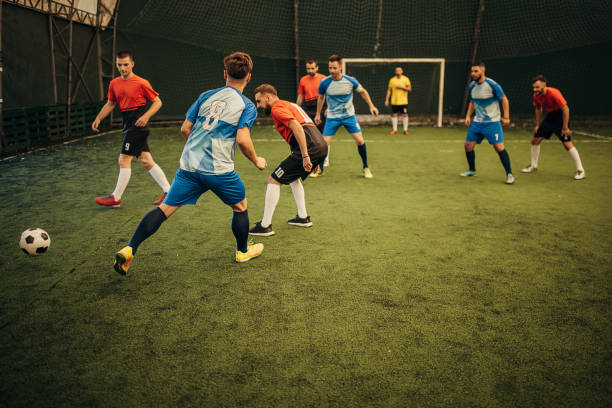
None of this is an argument that indoor soccer is without value, because dismissing it entirely would be unfair to a format that genuinely does some things well. Indoor soccer players love the walls, since the game is non-stop action with very few stoppages, creating lots of running and many more touches of the ball.
For raw conditioning, for game tempo, for keeping young players engaged and moving through long winter months when outdoor pitches are frozen or waterlogged, indoor soccer earns its place on a development calendar. Indoor soccer better develops physical fitness, teamwork, and adaptability, and there is nothing wrong with leaning on those strengths when that is specifically what a program needs from a session.
But footwork, narrowly and specifically defined as the capacity to manipulate a ball under close, immediate pressure using small, precise, two footed movements, is a different beast from general conditioning or game tempo. The smaller, heavier ball and compact court force players to perfect their first touch, close control, and passing accuracy, skills that transfer exceptionally well to outdoor soccer.
Walls help a game flow. They do not, by their very design, force a foot to develop the kind of precision that only comes from knowing the ball will not come back if the touch is wrong.