
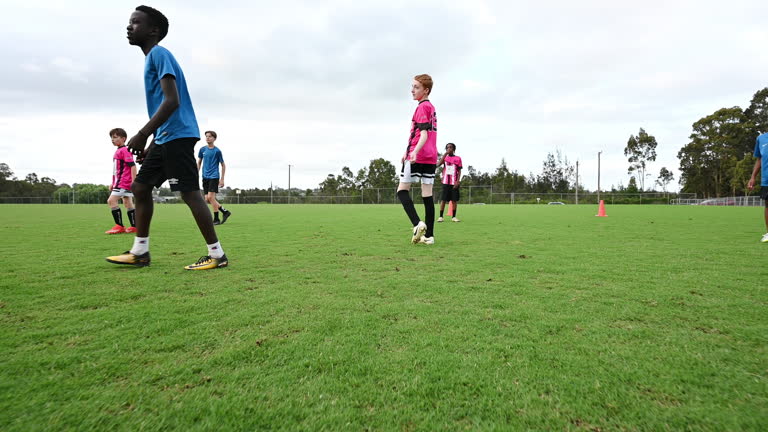
Parents often ask whether their child should play up an age group, especially after a coach suggests moving them into an older team or when a young player begins dominating games against children of the same age, and while the idea can sound like an exciting opportunity that signals fast development, the reality is far more complicated because success at one age level does not always mean a child is ready for the physical, emotional, tactical, and social demands that come with competing against older players.
Few decisions in youth soccer create more debate than this one because there is no universal answer that works for every child, every club, or every stage of development, and the same decision that accelerates one player’s progress can slow another player’s confidence, enjoyment, or long term growth without anyone realizing it until months later.
Across the United States, Canada, England, Spain, Germany, and many other leading soccer nations, coaches continue to wrestle with the balance between challenging talented young players and protecting their overall development, while parents often find themselves caught between excitement over an opportunity and concern about whether their child might be pushed into an environment that asks too much too soon.
The conversation has become even more important in recent years as player development models have continued shifting away from simply winning youth matches and toward producing technically complete, intelligent, resilient footballers who can continue improving throughout adolescence instead of peaking before their teenage years, and that change has encouraged many clubs to rethink when moving players into older age groups actually serves their long term interests.
Modern research into youth athlete development has also reinforced something experienced coaches have understood for years, which is that growth is rarely linear, children mature at dramatically different rates, and the strongest player at age ten may not be the strongest player by sixteen, just as the smallest child in today’s training session may eventually become the standout performer once physical development begins to even out.
That is why the question should never be framed around whether playing up is good or bad because both answers can be correct depending on the individual player, the coaching environment, the child’s personality, and the reasons behind the move, since development is shaped by dozens of small factors working together rather than one decision alone.
Understanding both the opportunities and the risks allows parents to move beyond the excitement of hearing that their child has been invited to join an older team, replacing emotion with informed judgment and focusing on what gives that young player the best chance of enjoying soccer while continuing to improve over many years rather than simply impressing people for one successful season.
What Does Playing Up an Age Group Mean?
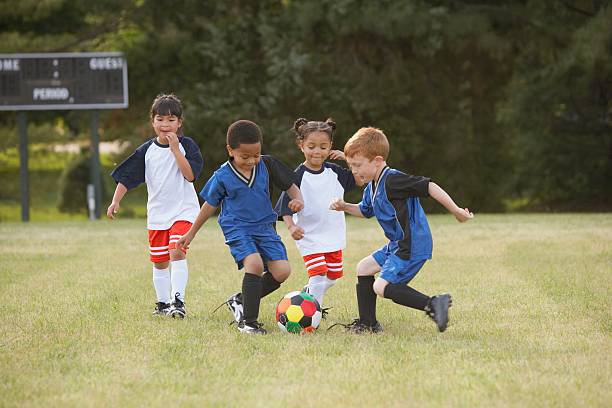
Playing up means a child regularly trains with or competes for a team made up of players who are older than they are, although the exact age difference varies depending on the league, club structure, and competition rules, with some players moving up by a single birth year while others occasionally compete two years above their natural age group in exceptional circumstances.
This arrangement may happen permanently, where the player officially joins the older squad for an entire season, or temporarily, where the child is invited to train with older teammates several times each week while continuing to play matches within their own age group, allowing coaches to gradually assess readiness before making any long term commitment.
Many parents assume playing up is reserved only for exceptional talents, yet clubs use the approach for several different reasons that extend beyond technical ability alone, including squad shortages, injury crises, tournament schedules, developmental planning, and providing certain players with new challenges after they have consistently mastered their current environment.
That difference matters because being invited to play up due to outstanding development carries very different implications from filling gaps in another team’s roster, and parents who understand the reason behind the opportunity are better positioned to evaluate whether it genuinely serves their child’s interests rather than solving a short term problem for the club.
CHECK OUT | How Many Days a Week Should Kids Practice Soccer?
Why Coaches Recommend Certain Players for Older Teams
The best youth coaches rarely promote children simply because they score the most goals or dominate weekend matches, since goals at younger ages often reflect temporary physical advantages rather than long term football potential, and experienced development staff spend far more time evaluating decision making, learning capacity, technical consistency, and emotional maturity than they do counting goals or assists.
A player who consistently makes intelligent decisions under pressure, communicates well with teammates, adapts quickly after mistakes, and demonstrates curiosity during training often attracts more attention than another player who relies primarily on speed or physical strength to overpower younger opponents.
Coaches also recognize that development slows when talented children stop facing meaningful challenges, because repeatedly succeeding without being stretched can encourage habits that eventually become weaknesses once opponents catch up physically or tactically during adolescence.
For example, a young striker who scores thirty goals simply by outrunning defenders may never fully develop movement off the ball, first touch under pressure, combination play, or finishing in crowded penalty areas if every match feels comfortable, whereas competing against older defenders forces quicker thinking, cleaner technique, and greater tactical awareness.
Similarly, a midfielder who always has unlimited time on the ball in younger games suddenly discovers that older opponents close space much faster, forcing faster decisions and improving scanning habits before receiving possession, which are qualities consistently found among elite midfielders across professional football.
Goalkeepers often experience another dimension entirely because older teams generally produce more accurate shooting, faster attacks, better crossing quality, and more demanding decision making around positioning, allowing young keepers to accelerate their reading of the game while facing situations they may not encounter regularly within their own age group.
None of this guarantees that moving up is the correct decision, but it explains why thoughtful coaches often view stronger competition as a developmental tool rather than a reward, focusing less on immediate success and more on exposing players to situations that encourage continuous learning.
The Biggest Benefits of Playing Up an Age Group
When handled carefully, playing against older players can provide experiences that simply cannot be recreated within a child’s normal age group, particularly once technical ability begins separating certain players from their peers and routine matches no longer challenge their decision making or execution.
Faster Technical Development
Older players generally control the ball more cleanly, move it more quickly, anticipate situations earlier, and punish technical mistakes with greater consistency, creating an environment where every touch matters and every decision carries greater consequences.
Young players quickly discover that holding the ball for an extra second often leads to losing possession, while passes that comfortably reached teammates in younger matches suddenly become interceptions, forcing improvements in first touch, body shape, awareness, passing accuracy, and ball protection through repeated exposure rather than constant verbal instruction.
Instead of relying on physical advantages, children begin solving football problems with technique, vision, and intelligence, which ultimately provides a stronger foundation for future development than simply overpowering smaller opponents.
CHECK OUT | Can My Child Guest Play for Another Soccer Team?
Better Tactical Understanding
Soccer gradually becomes more complex as children grow older because positioning, movement, pressing, defensive organization, transitions, and communication all become increasingly sophisticated, allowing younger players who compete within these environments to absorb concepts earlier than many of their peers.
Training alongside older teammates also exposes children to faster conversations about the game, more detailed coaching instructions, and situations that require constant awareness of teammates, opponents, available space, and changing tactical patterns throughout each session.
Those experiences often accelerate football intelligence because learning occurs naturally through repetition inside demanding environments rather than exclusively during classroom style coaching discussions.
Increased Mental Toughness
One of the most overlooked advantages of playing up has little to do with physical performance and everything to do with mindset, since young players who suddenly discover they are no longer the best player on the field often experience valuable lessons about persistence, humility, resilience, and patience.
Instead of expecting every dribble to succeed or every shot to become a goal, they learn how to respond after losing challenges, making mistakes, or facing opponents who refuse to be intimidated, gradually building emotional resilience that becomes increasingly valuable throughout adolescence.
Children who embrace these moments often become more adaptable athletes because they develop confidence based on continuous learning rather than constant success, allowing setbacks to become opportunities instead of personal failures.
Greater Long Term Motivation
Talented children occasionally become bored when every weekend produces similar results against familiar opponents, and while winning always feels enjoyable, improvement often slows once challenge disappears from daily training and competition.
Moving into an older age group introduces new standards, new expectations, stronger teammates, and opponents who require genuine concentration every minute of every match, creating an environment where effort once again becomes necessary for success and development resumes naturally.
Many players describe this period as the point where they truly began understanding soccer because every action demanded thought instead of instinctively relying on superior speed or strength.
Exposure to Better Habits
Older teams frequently operate with higher expectations surrounding preparation, concentration, communication, accountability, and professionalism during both training and matches, allowing younger players to absorb habits that often remain with them throughout their sporting journey.
Simple routines such as arriving prepared, listening carefully during tactical discussions, supporting teammates after mistakes, maintaining focus throughout demanding sessions, and accepting constructive feedback become normal rather than exceptional because they are consistently reinforced by coaches and older teammates alike.
These lessons often extend well beyond soccer, influencing confidence, discipline, teamwork, and personal responsibility in school, other sports, and everyday life..
CHECK OUT | Why Girls Drop Out of Soccer During Puberty
The Risks of Playing Up That Many Parents Overlook
The excitement surrounding a move to an older team can sometimes overshadow the challenges that naturally come with it, and while parents often focus on the opportunity itself, experienced coaches usually spend far more time thinking about what the player may lose along the way because development depends on far more than facing tougher opponents every weekend.
Playing against older children increases the level of competition in almost every area of the game, from the speed of play to the physical demands, tactical complexity, and emotional pressure, and unless those challenges remain within a player’s ability to adapt and recover, the experience can begin producing frustration instead of growth.
The goal is never to make soccer harder for the sake of making it harder.
The goal is to provide a challenge that stretches a child without overwhelming them, allowing confidence and learning to grow together rather than forcing one to come at the expense of the other.
Physical Differences Can Become a Serious Obstacle
One of the biggest realities of youth soccer is that children of the same chronological age often develop physically at completely different rates, and once an additional birth year enters the picture, those differences can become even more noticeable because puberty rarely follows a predictable timeline.
A twelve year old competing against thirteen year olds may not simply be facing children who are one calendar year older. They may be competing against players who are several inches taller, twenty pounds heavier, significantly faster, and considerably stronger because their bodies have entered a different stage of physical development.
That gap influences nearly every action on the field, including shielding the ball, winning tackles, sprinting into space, jumping for headers, recovering after contact, and maintaining balance under pressure, all of which can leave technically gifted younger players struggling despite making good football decisions.
Research across youth sports continues to show that rapid growth periods also increase injury risk because bones, muscles, tendons, and ligaments do not always develop at exactly the same pace, making workload management increasingly important during adolescence, particularly for children who train and compete across multiple teams.
For parents, this means paying close attention to signs of physical fatigue rather than assuming soreness simply reflects hard work.
Common warning signs include:
- Persistent muscle soreness that lasts several days after matches.
- Repeated complaints about knee, heel, groin, or lower back pain.
- A noticeable drop in running intensity during training.
- Frequent minor injuries that never seem to fully disappear.
- Needing unusually long recovery periods after games.
Ignoring these signs in pursuit of faster development rarely benefits the player over the long term.
CHECK OUT | How to Counter a High Press: A Tactical Guide
Confidence Can Disappear Faster Than It Was Built
Many talented young players spend years becoming one of the strongest performers in their own age group, earning confidence through consistent success, and while confidence should never depend entirely on results, repeated positive experiences naturally reinforce belief in their own ability.
Playing up changes that environment almost immediately.
The child who once completed every dribble may suddenly lose possession several times in the opening minutes of a match. The defender who rarely lost a one on one duel may find stronger forwards holding them off with ease. The striker who regularly scored hat tricks may go weeks without finding the net.
None of those outcomes necessarily indicate regression.
They often reflect a much higher level of competition.
The challenge comes when children interpret those struggles as personal failure instead of normal adjustment.
This is where parents often have more influence than they realize.
Children usually take emotional cues from the adults around them, and if every conversation after a match focuses on statistics, mistakes, or comparing performances to previous seasons, confidence can slowly become tied to outcomes rather than improvement.
The healthiest environments celebrate learning as much as winning because progress rarely follows a straight line.
Playing Time Matters
A difficult question sometimes gets overlooked once a player receives an invitation to move up.
Will they actually play?
Training with stronger teammates almost always has value, but spending entire weekends on the bench offers far fewer developmental opportunities than regularly playing meaningful minutes within the correct age group.
Touches on the ball remain one of the most valuable learning tools in youth soccer, particularly before players reach the later teenage years, because every pass, tackle, recovery run, and decision adds another layer to their understanding of the game.
A child receiving eighty minutes every weekend against age appropriate opponents may develop faster than another child receiving ten minutes with an older elite squad.
Development is measured through meaningful involvement rather than simply wearing the badge of a higher team.
Parents should never feel uncomfortable asking coaches how they expect playing time to look over the course of a season because that conversation provides valuable context beyond the excitement of promotion.
Social Development Should Never Be Ignored

Soccer remains a competitive sport, but for children it also provides friendship, belonging, laughter, shared experiences, and emotional security.
Moving into an older age group sometimes means leaving behind teammates who have become close friends over several seasons, entering a dressing room where established relationships already exist, and learning to fit into an entirely different social environment.
Some children adapt naturally.
Others need time.
A player who feels isolated away from the ball rarely performs with the same freedom as one who feels accepted by teammates, and while coaches naturally focus on football development, parents should pay equal attention to whether their child still looks forward to attending training.
Enthusiasm often reveals far more than statistics ever will.
CHECK OUT | Best Youth Soccer Clubs in Massachusetts For Aspiring Players
Red Flags That Suggest Your Child May Not Be Ready
Not every talented player benefits from moving into an older age group immediately, and experienced coaches often delay promotion because timing matters almost as much as ability.
Parents should pay attention when several of these signs begin appearing consistently.
Physical Red Flags
- Your child struggles to cope with routine physical contact.
- They frequently avoid challenges they previously embraced.
- Recovery becomes noticeably slower after training.
- Small injuries begin appearing more regularly.
- They seem physically exhausted throughout the week.
Emotional Red Flags
- Confidence drops sharply after several matches.
- They become unusually anxious before training sessions.
- Mistakes affect them for the remainder of games.
- They begin criticizing themselves far more than before.
- Soccer starts feeling like an obligation rather than something they genuinely enjoy.
Developmental Red Flags
- Playing time remains extremely limited for extended periods.
- Coaches provide very little individual feedback.
- Improvement appears to stall across several months.
- Training intensity regularly exceeds the child’s ability to recover.
- The promotion appears motivated by team numbers rather than player development.
One isolated sign rarely signals a problem.
Several appearing together deserve careful attention.
Green Flags That Suggest Playing Up Could Be the Right Move
Just as there are warning signs, there are also encouraging indicators that suggest a player may genuinely benefit from competing with older teammates.
Children who thrive after moving up often share several common characteristics.
They remain eager to attend every training session despite finding the environment more challenging.
They respond positively after making mistakes instead of becoming discouraged.
They ask thoughtful questions about improving their game.
They recover well between sessions.
They continue enjoying soccer even during difficult periods.
Perhaps most importantly, they steadily improve despite occasionally struggling, which usually indicates that the challenge remains within their developmental reach.
CHECK OUT | 10 Best Youth Soccer Clubs in Minnesota for Aspiring Players
Questions Every Parent Should Ask
Receiving an invitation to play up can feel flattering, but thoughtful parents gather information before making a decision because understanding the full picture almost always leads to better outcomes.
Useful questions include:
- Why is my child being moved up?
- Is this expected to be temporary or permanent?
- How much playing time is realistically available?
- Which areas of development are you hoping this move improves?
- How will workload be managed throughout the season?
- Can my child move back if the arrangement proves unsuitable?
- How will progress be evaluated over the coming months?
These conversations demonstrate partnership rather than disagreement, and most experienced youth coaches welcome parents who want to understand the developmental plan.