The FIFA 11+ warm up program gives youth soccer coaches a practical way to build strength, balance, landing control and better movement mechanics into the first 20 minutes of training, which makes it particularly valuable for reducing knee and ACL injury risk in young players.
For parents of female players, the subject deserves even more attention because adolescent female soccer players carry a higher ACL injury burden than their male counterparts, with recent research identifying soccer as the highest-risk sport for ACL injury among adolescent female athletes.
The important point is that injury prevention does not require a complicated gym programme or expensive equipment, because the FIFA 11+ uses running drills, bodyweight strength exercises, balance work, plyometrics and controlled changes of direction that can be performed on a normal soccer field.
The programme was developed around neuromuscular training, which means teaching the athlete’s brain and muscles to coordinate movement more effectively, particularly when landing, slowing down, accelerating, cutting and controlling the knee under pressure.
That matters because many non-contact ACL injuries occur during exactly those moments, when a player plants a foot, changes direction or lands from a jump while the hip, knee and trunk are not adequately controlled.
What Is the FIFA 11+ Warm-Up Program?
The FIFA 11+ is a structured injury-prevention warm-up developed through FIFA’s medical and research programme, with the original programme designed principally for soccer players aged roughly 14 and older, while the FIFA 11+ Kids version was developed for younger children.
The standard FIFA 11+ takes approximately 20 minutes and is divided into three sections, beginning with controlled running, moving into strength, plyometric and balance exercises, and finishing with faster running, acceleration, deceleration and cutting movements.
That structure separates the programme from a conventional warm-up based mainly on jogging, static stretching and a few minutes of passing, because every movement has a technical purpose related to how players control their bodies during football actions.
The programme contains 15 core exercises with three levels of difficulty, allowing coaches to progress players gradually rather than asking a young athlete to perform advanced single-leg squats, jumping or hamstring exercises before they have developed sufficient control.
For younger children, FIFA 11+ Kids is the more appropriate version, and research in children aged 7 to 13 has found meaningful reductions in overall injuries when the programme is used regularly instead of a conventional warm-up.
CHECK OUT | How Many Days a Week Should Kids Practice Soccer?
Why ACL Prevention Matters So Much in Female Soccer
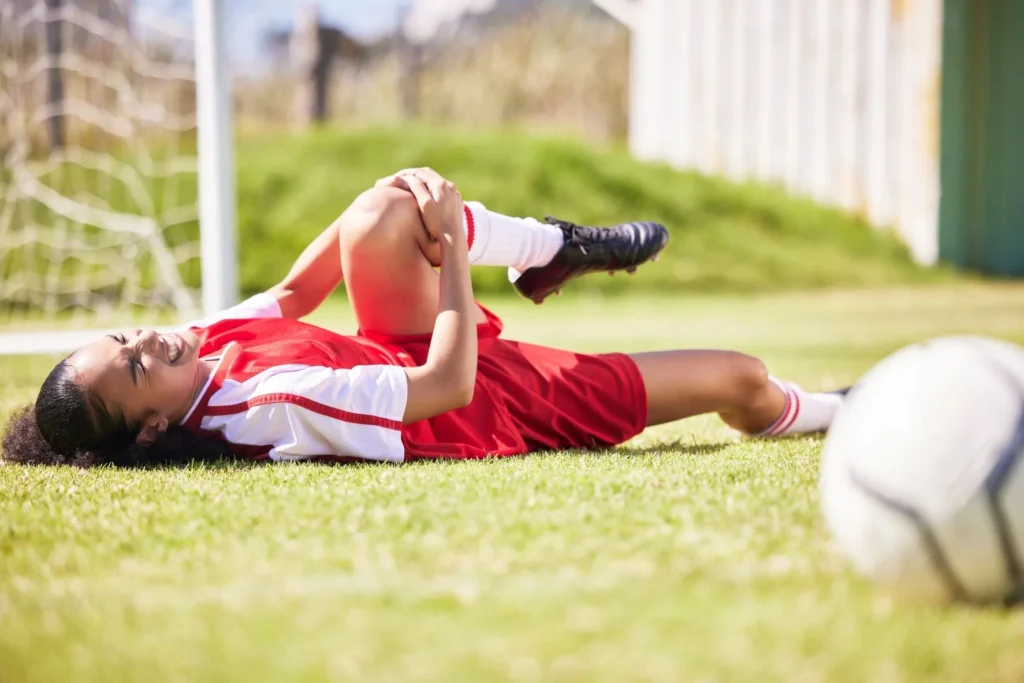
The anterior cruciate ligament, commonly called the ACL, helps control forward movement and rotation of the knee, making it particularly important in a sport where players repeatedly accelerate, stop, turn, jump and land at speed.
An ACL rupture can remove a player from football for many months, while the rehabilitation process can involve surgery, extensive strength training, progressive running, technical retraining and a carefully managed return to sport.
The risk also deserves attention during adolescence, because a 2024 systematic review and meta-analysis found that female athletes had a higher ACL injury rate than males, with soccer showing the highest relative risk among the female sports examined.
Earlier football-specific research has also found that female soccer players experienced approximately 2.2 times the ACL injury incidence rate of male players, although the exact risk varies considerably according to age, competition level, exposure and study population.
That difference does not mean that female players are destined to suffer knee injuries, because neuromuscular training programmes have repeatedly demonstrated that movement quality, strength and landing mechanics can be improved through consistent training.
A major systematic review involving more than 11,000 female football players found that multicomponent exercise programmes reduced overall injuries and reduced ACL injuries, with the strongest programmes generally combining strength, plyometric and balance exercises rather than relying on one exercise alone.
What Warm-Up Exercises Prevent ACL Tears in Female Soccer Players?
There is no single warm-up exercise that can guarantee protection from an ACL tear, but the strongest evidence supports programmes combining running, strength, balance, plyometrics, landing technique and controlled changes of direction.
The FIFA 11+ fits that model particularly well because it teaches players to control their hips, knees and trunks while gradually increasing the speed and complexity of movements before football training becomes intense.
The exercises most relevant to ACL and knee injury prevention include the following components.
Running Straight Ahead
The opening running drills gradually raise body temperature while giving players an opportunity to establish controlled posture and foot placement before the more demanding strength and jumping exercises begin.
Coaches should encourage relaxed running, stable trunk positioning and controlled acceleration rather than turning the opening section into a race, because the purpose at this stage remains preparation rather than maximum speed.
A simple passing warm-up can then help players shift from individual movement preparation into early technical work, giving them touches on the ball while gradually getting the team into the rhythm of training.
Hip In and Hip Out
The hip mobility exercises involve lifting the knee and rotating the hip inward or outward while moving forward, giving players dynamic mobility work without stopping them completely between movements.
This becomes particularly useful for young athletes because the hip, pelvis and trunk influence how forces travel through the lower limb, meaning knee control cannot be considered separately from the rest of the movement chain.
CHECK OUT | How to Counter a High Press: A Tactical Guide
The Bench and Sideways Bench
The Bench develops trunk and core control, while the Sideways Bench places greater emphasis on lateral trunk and hip stability, creating a foundation for controlling the pelvis during running, landing and single-leg movements.
Players should maintain a straight body position and avoid allowing the hips to sag, because poor technique can turn a useful strength exercise into a movement that reinforces the very control problems the coach is trying to improve.
Hamstring Strengthening
The hamstring exercise progresses through beginner, intermediate and advanced levels, with the later stages requiring substantially greater eccentric strength and control from the posterior thigh muscles.
Hamstring strength matters because soccer players need to control the knee during acceleration and deceleration, while a balanced relationship between the quadriceps, hamstrings and hip musculature contributes to better lower-limb control during demanding football movements.
Single-Leg Balance
Single-leg balance begins with relatively simple control and progresses toward more challenging tasks involving a ball and a partner, which makes the exercise increasingly similar to the unpredictable demands players face during football.
A young player who can maintain stable alignment on one leg while receiving or interacting with a ball is developing a useful movement skill that carries over into landing, tackling, shooting and changing direction.
Squats and Single-Leg Squats
Squatting teaches players to bend through the hips and knees while maintaining control, while the progression toward lunges and single-leg squats increases the demand placed on balance, hip strength and knee alignment.
Coaches should pay particular attention to whether the knee collapses inward during the movement, because excessive dynamic knee valgus is one of the movement patterns associated with increased ACL loading and poor lower-limb control.
Jumping and Landing
The jumping section progresses through vertical, lateral and more advanced jumping movements, giving players repeated opportunities to practise absorbing force through the hips, knees and ankles rather than landing stiffly with poor alignment.
The technical instruction should focus on soft landings, controlled knee position, balanced weight distribution and a stable trunk, because the quality of the landing matters considerably more than simply producing a higher jump.
Research involving 10 to 12-year-old female soccer players found that eight weeks of FIFA 11+ Kids training performed twice weekly improved knee flexion and hip movement during single-leg drop landings, changes that may reduce ACL stress during landing.
Plant and Cut
The final section introduces faster running and changes of direction, including the plant-and-cut movement, which closely resembles the situations in which soccer players experience substantial knee loading.
This part should never become an uncontrolled sprinting contest, because players need to demonstrate good braking mechanics, body control and knee alignment while changing direction before the coach gradually increases the speed.
How the FIFA 11+ Protects the Knee
The strength of the FIFA 11+ comes from its combination of different training qualities rather than one magical exercise, because knee injury risk is influenced by strength, balance, coordination, landing mechanics, fatigue, movement strategy and the demands placed on the athlete.
The programme progressively exposes players to movements that resemble football actions while giving coaches an opportunity to correct technique before players enter full-speed drills and competitive situations.
The 2023 clinical practice guidelines for exercise-based knee and ACL injury prevention include the FIFA 11+ among established programmes and describe its structure as eight minutes of running, approximately ten minutes of strength, plyometric and balance work, followed by two minutes of running, bounding and plant-and-cut exercises.
This progression makes practical sense on a training pitch because players first become physically active, then perform controlled strength and balance work, and finally finish the warm-up with movements that resemble the speed and direction changes they will encounter during training.
How Often Should Young Soccer Players Perform FIFA 11+?
Consistency matters more than occasionally completing an impressive prevention session, because the neuromuscular improvements targeted by these programmes depend on repeated exposure and reinforcement over the course of a season.
Research involving adolescent female players has found meaningful benefits when FIFA 11+ was performed at least twice per week, while studies of female youth teams have also shown that higher adherence is associated with lower injury risk and better functional balance.
A practical target for youth coaches is therefore to use the programme before training at least twice each week, with the exercises performed carefully enough that players learn the correct movement patterns instead of rushing through them simply to save several minutes.
Coaches should also avoid treating the FIFA 11+ as something reserved for injury-prone players, because prevention works best when the entire squad follows the same routine and movement standards throughout the season.
What the Research Says About FIFA 11+ and Injury Reduction
The evidence behind the programme is broader than a single study, with a systematic review of six randomized controlled trials involving 6,344 soccer players finding an overall 30% reduction in injuries among players using FIFA 11+ compared with control groups.
The female youth evidence is particularly relevant to this article, because one large randomized trial involving 1,892 Norwegian female players aged 13 to 17 found a 32% reduction in overall injury incidence among those using the programme.
Another study involving female players aged 13 to 18 found that players with high adherence to FIFA 11+ had a substantially lower injury risk than those with low adherence, although the authors appropriately noted that the difference became less certain after adjustment for other factors.
Research from Nigeria also adds useful context for coaches working in African football environments, because a randomized trial involving players aged 14 to 19 found approximately a 41% reduction in overall injury rates among those using FIFA 11+.
The evidence does not mean that FIFA 11+ eliminates ACL injuries, because no exercise programme can remove every biological, environmental, workload or game-related risk. Players also need to understand how different movements during matches place demands on the knees and the rest of the movement chain, while structured neuromuscular training remains an important part of a youth soccer programme.
FIFA 11+ Versus a Normal Dynamic Warm-Up
A dynamic warm up soccer routine can be useful when it includes progressive running, mobility and movement preparation, but a simple routine of jogging, high knees and dynamic stretching may not provide the same combination of strength, balance, plyometric and cutting work found in FIFA 11+.
The difference becomes especially important when coaches spend ten minutes warming players up but almost none of that time teaching them how to land, decelerate or control their knees during single-leg movements.
A well-designed dynamic warm-up should prepare the athlete for the specific demands of the session, while an injury-prevention programme such as FIFA 11+ adds a deliberate neuromuscular training component that develops qualities useful for reducing injury risk.
Recent research on dynamic warm-ups continues to support their role in athletic preparation and injury prevention, while the FIFA 11+ remains one of the best studied structured examples available to soccer coaches.
How Coaches Should Teach the Programme
The coach’s eye matters because simply completing the prescribed exercises does not guarantee that players are receiving the intended benefit, particularly when young athletes are tired, distracted or competing to finish first.
During squats, lunges and single-leg exercises, coaches should look for controlled knee alignment, stable hips and deliberate movement, while jumping exercises should emphasise quiet landings with the athlete absorbing force rather than locking the knees on contact.
During cutting drills, players should learn to slow their bodies before changing direction, keep their centre of mass under control and avoid allowing the knee to collapse inward as they plant the foot.
Progression should be earned through technique rather than age alone, because two players in the same age group can have very different levels of strength, coordination, balance and movement experience.
The evidence also shows why coach education matters, since studies of female youth teams found that structured coach education and supervision can improve adherence to the programme, while higher adherence has repeatedly been associated with better injury outcomes.
CHECK OUT | 10 Skill Moves All Youth Soccer Players Must Learn
FIFA 11+ Kids for Younger Players
Coaches working with children below the usual age range for the standard FIFA 11+ should use FIFA 11+ Kids rather than simply forcing younger players through an adult-oriented programme.
The Kids version was specifically adapted to make injury prevention more suitable for children, with exercises designed around age-appropriate movement, coordination, balance, strength and football-related challenges.
A systematic review and meta-analysis found that FIFA 11+ Kids reduced overall injury risk by approximately 48%, while knee injury risk was reduced by about 55% in the included studies, although the researchers also noted limitations in the available evidence.
Another randomized trial involving 780 boys aged 7 to 13 found that teams using FIFA 11+ Kids experienced 57% fewer injuries than teams using their usual warm-up routines, providing further support for structured prevention in younger football.
For parents, the practical takeaway is straightforward, because a younger child does not need to lift heavy weights or perform advanced conditioning to start developing better movement habits that can support a healthier football career.
What Parents of Female Players Should Look For
Parents should pay attention to whether their daughter’s club treats injury prevention as part of normal football development rather than something introduced only after a serious knee injury has already occurred.
A good youth environment should include regular neuromuscular preparation, appropriate strength development, sensible training loads, adequate recovery and coaches who actively correct poor landing and cutting mechanics.
Parents should also take persistent knee pain, swelling, instability, locking or an injury that changes the way a player runs seriously, because a warm-up programme cannot diagnose or treat an existing knee problem.
A player returning from an ACL injury or another significant knee injury needs an individual rehabilitation and return-to-sport plan from qualified medical professionals, rather than simply returning to the team’s normal FIFA 11+ routine.
A Practical FIFA 11+ Routine for Youth Coaches
For players old enough for the standard programme, coaches can organise the session around the established three-part structure, beginning with approximately eight minutes of progressive running before moving into strength, balance and plyometric work.
The middle section should take roughly ten minutes and include the Bench, Sideways Bench, hamstring strengthening, single-leg balance, squats and jumping exercises, with players progressing through the three difficulty levels only after demonstrating good control.
The final two minutes should introduce faster running, bounding and controlled plant-and-cut movements, allowing the athlete to finish the warm-up prepared for the accelerations, decelerations and directional changes that will follow during football training.
For younger children, coaches should instead use the FIFA 11+ Kids programme, which has demonstrated benefits in injury prevention and motor performance among children playing organized soccer.